Knitting and crocheting offer more than just handmade creations - they provide a soothing escape from daily stress. Studies show that the repetitive motions of these crafts calm the mind, reduce cortisol levels, and boost serotonin, making them powerful tools for managing anxiety. From the rhythmic flow of stitching to the tactile feel of soft yarn, fiber arts engage the brain in ways similar to meditation. Whether you’re a beginner or experienced, this guide explores how knitting can improve mental well-being, the best materials for a relaxing experience, and techniques to make crafting a calming daily ritual.
Let’s dive into how you can use knitting to bring peace and focus to your routine.
The Science Behind Knitting and Stress Relief
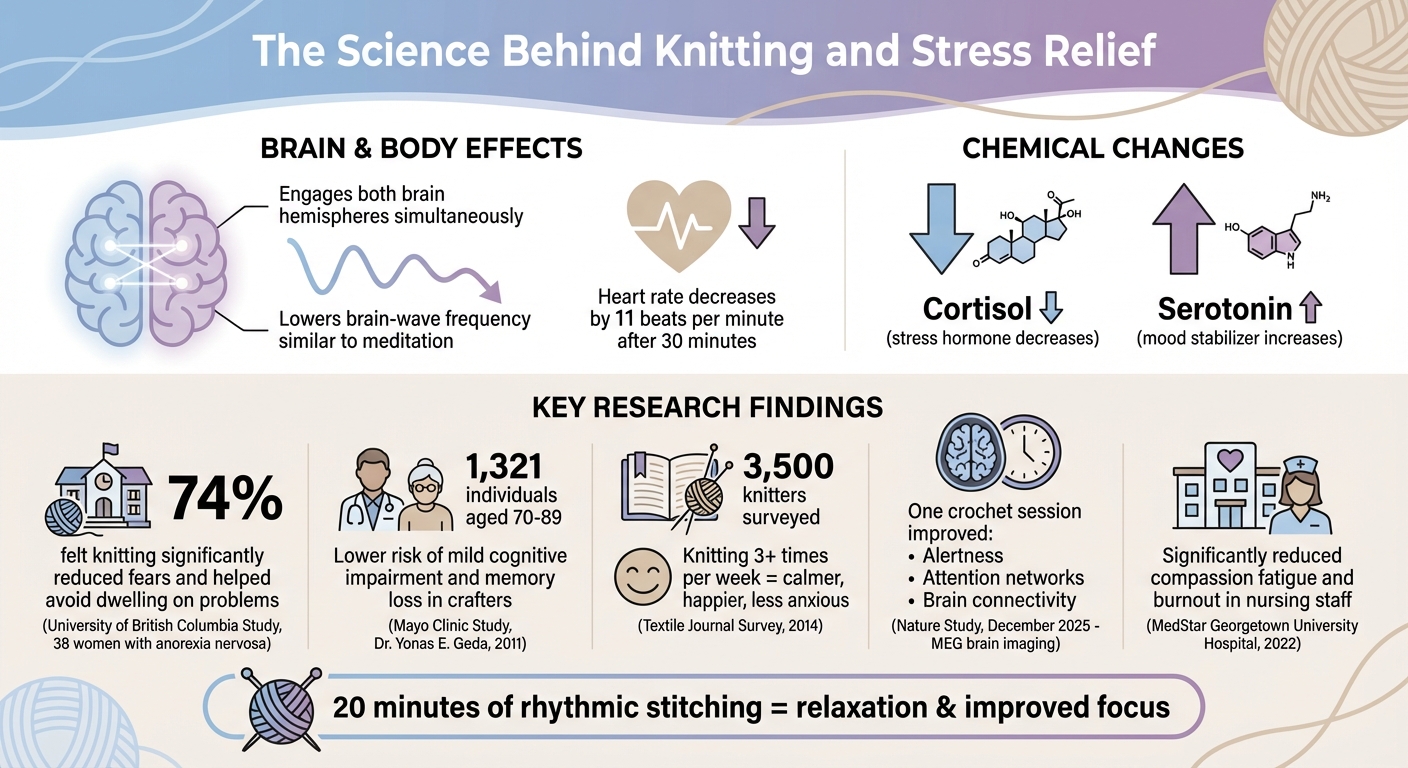
How Knitting Reduces Stress: Key Research Findings and Benefits
Knitting does more than create beautiful patterns - it sparks real changes in your brain and body that help counteract stress. Let’s take a closer look at how working with yarn can soothe the mind.
How Repetitive Hand Movements Calm the Brain
The repetitive, coordinated motions of knitting engage both hemispheres of your brain at the same time. Unlike one-handed tasks, this dual engagement can lead to a meditative-like state. Licensed psychotherapist Toni D. Kim explains:
The repetitive motion of knitting induces your body's relaxation response, lowering your heart rate, blood pressure, and muscle tension. Repetitive activity also lowers brain-wave frequency and can have the same effects on the brain as meditation.
In December 2025, researchers published findings in Nature using Magnetoencephalography (MEG) brain imaging to study skilled crocheters. They discovered that just one crochet session improved alertness, enhanced attention networks, and strengthened brain connectivity.
Even more compelling, the focused nature of knitting can interrupt cycles of rumination - those repetitive, negative thoughts that often fuel anxiety. Wellness coach and author Betsan Corkhill highlights this unique benefit:
Knitting seems to break into those ruminative thoughts... [it] is more powerful than drugs in reaching into the subconscious and rewiring entrenched negative neural pathways.
A study at the University of British Columbia involving 38 women with anorexia nervosa found that 74% of participants felt knitting significantly reduced their fears and helped them avoid dwelling on their problems.
These brain responses also spark important chemical changes in the body.
Serotonin and Cortisol: The Chemical Response
Knitting’s rhythmic, repetitive nature doesn’t just calm the mind - it also triggers chemical shifts that improve emotional well-being. It lowers cortisol, the stress hormone, while increasing serotonin, the neurotransmitter responsible for stabilizing mood and promoting happiness.
This chemical boost may explain why many knitters notice an immediate lift in their spirits. Beyond that, creating something tangible and useful can enhance self-esteem and provide a sense of accomplishment, deepening these positive effects.
But knitting’s benefits go beyond brain chemistry - it can also serve as a form of active meditation.
Knitting as a Form of Active Meditation
Unlike traditional meditation, which often requires stillness and a quiet mind, knitting provides a hands-on way to achieve similar mental clarity. The tactile nature of knitting, combined with rhythmic counting, keeps you rooted in the present. Health columnist Jane Brody describes this grounding effect perfectly:
When my hands are busy, my mind stays focused on the here and now.
In 2011, a study led by Dr. Yonas E. Geda at the Mayo Clinic examined 1,321 individuals aged 70 to 89. It found that those who engaged in crafts like knitting or crocheting had a noticeably lower risk of mild cognitive impairment and memory loss compared to those who didn’t.
Similarly, at MedStar Georgetown University Hospital in 2022, two oncology nurses - backed by the nonprofit Project Knitwell - conducted research showing that knitting significantly reduced "compassion fatigue" and burnout among nursing staff. By encouraging a steady, rhythmic stitching pattern rather than rushing to finish, knitting naturally promotes a meditative state.
This active form of meditation not only provides immediate relief but also strengthens your mental resilience over time.
Tools and Materials for Relaxation-Focused Knitting
The right tools and materials can turn knitting from a source of tension into a calming activity. If your knitting setup is uncomfortable, it’s harder to tap into the mental health benefits we’ve discussed. Let’s explore how to choose supplies that support both your hands and your peace of mind.
Choosing Soft, Comfortable Yarns
The feel of your yarn plays a big role in how soothing your knitting experience will be. Soft fibers provide a comforting tactile experience that can help ease stress and create a sense of calm. Knitting itself offers grounding sensory feedback, which helps shift your focus away from daily worries.
Luxury fibers like cashmere are often praised for their calming qualities. The texture - whether smooth, soft, or slightly textured - enhances the sensory aspect of knitting, making it easier to relax. Beginners may prefer thicker yarns since they’re easier to work with and allow for quicker progress, reducing frustration and keeping the process enjoyable.
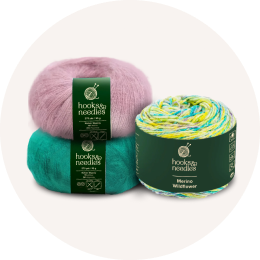
When selecting yarn for stress relief, focus on how it feels in your hands rather than solely on the final look of your project. Check out the Hooks & Needles yarn collections for options designed to inspire calm and comfort.
Once you’ve chosen a yarn that feels right, the next step is to find tools that keep your hands comfortable.
Ergonomic Hooks and Needles to Ease Hand Strain
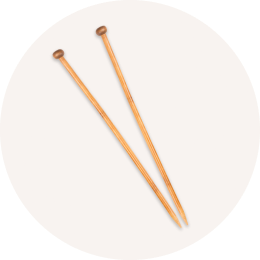
Comfort is key when it comes to enjoying the calming effects of knitting. Ergonomic tools are specifically designed to reduce hand fatigue by evenly distributing pressure and minimizing the effort needed to hold and control them. Needles with square or triangular shapes can help prevent pain and calluses by increasing the contact area with your fingers.
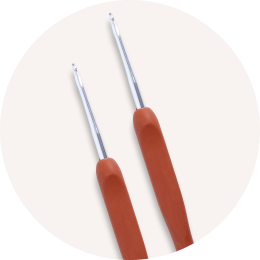
The material of your tools also makes a difference. Options like wood, bamboo, or high-performance plastic tend to retain warmth, which can help keep your joints flexible. Ergonomic crochet hooks often feature soft-grip handles made of silicone or rubber, which are easier to hold and reduce the need for a tight grip.
For larger projects, circular knitting needles are a great choice since they allow the weight of your work to rest in your lap, easing the strain on your wrists and hands. Some ergonomic needles even have tear-drop or hook tips that help prevent yarn from slipping off, reducing the physical effort needed to complete stitches.
Explore the premium tools and accessories at Hooks & Needles, carefully selected to support comfortable and enjoyable crafting sessions.
With the right tools and materials, you’ll set yourself up for stress-free knitting. Now, let’s look at projects that are perfect for beginners seeking relaxation.
Simple Projects for Beginners
Relaxation-focused knitting should keep your hands busy and your mind engaged - just enough to quiet anxious thoughts without overwhelming you. Simple projects like scarves, preemie hats, or granny squares are ideal. They’re structured enough to provide a sense of accomplishment without adding unnecessary stress. As Project Knitwell explains:
Knitting is a creative activity that is executed within the 'safe' structure of a pattern.
Straightforward patterns make it easier to maintain a meditative focus. In noisy environments or during particularly stressful times, simple projects work best. If you’re looking to take your mind off internal worries, learning a new technique can also be a helpful distraction.
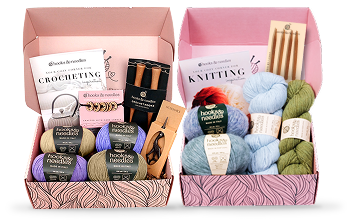
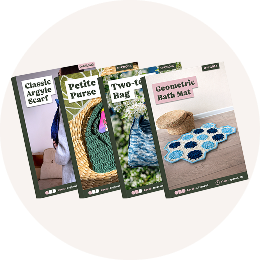
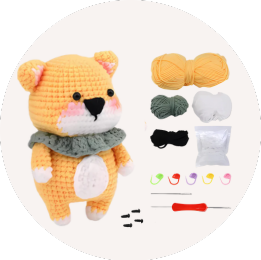
Start with projects that emphasize the process rather than the outcome. Hooks & Needles crochet and knitting kits include everything you need - yarn, patterns, and tools - so you can dive into crafting without the hassle of gathering supplies. These kits make it easy to create beautiful handmade pieces while enjoying the calming rhythm of knitting.
Techniques for Stress Management Through Fiber Arts
Now that you’ve gathered your tools and chosen your projects, let’s dive into some techniques that make knitting and crocheting a soothing escape from stress. These methods go beyond crafting - they help turn your creative time into a calming ritual for your mind and body.
Developing a Steady Stitching Rhythm
Creating a consistent stitching rhythm is key to experiencing the calming effects of knitting or crocheting. Instead of focusing on speed, aim for a steady, repetitive flow. This repetitive motion activates your parasympathetic nervous system, which helps reduce the "fight or flight" response and brings a sense of calm.
Between January 2021 and December 2022, researchers at the Fondazione-IRCCS-Istituto Neurologico "Carlo Besta" in Milan studied 41 experienced crocheters using Magnetoencephalography (MEG). They found that just 20 minutes of crocheting a granny square significantly improved the brain's ability to process and share information, enhancing alertness and focus. Using both hands during the activity engages more of the brain, creating a meditative rhythm.
Another study published in 2014 by Corkhill, Hemmings, Maddock, and Riley in the journal Textile surveyed 3,500 knitters. It revealed that those who knitted more than three times a week reported feeling calmer, happier, and less anxious compared to those who knitted less often.
For an even deeper meditative effect, try syncing your movements with your breathing. For example, inhale as you knit and exhale as you purl. Counting stitches can also help quiet your mind, keeping you focused on the present moment rather than on anxious thoughts.
Focusing on the Sensory Experience
Once you’ve established a steady rhythm, focus on the sensory details of your craft. Paying close attention to physical sensations can help ground your mind and keep you in the moment. Notice the feel of the yarn gliding through your fingers, the weight of your project resting on your lap, or the gentle clicking of the needles. This tactile focus can reduce feelings of detachment and bring a sense of calm.
Knitting for just 30 minutes has been shown to lower heart rates by an average of 11 beats per minute, producing effects similar to guided relaxation techniques. The sensory richness of fiber arts plays a big role in this. Kathryn Vercillo, a researcher and author, explains:
The sensory richness of fiber arts makes it particularly effective in grounding individuals in the here and now, fostering a state of relaxed engagement where self-consciousness fades.
To deepen this experience, try isolating one sensation at a time. First, focus on the temperature of the yarn, then shift your attention to its color, and finally notice its texture as it moves through your hands. This practice helps quiet the analytical side of the brain, encouraging a more intuitive and creative state of mind.
Natural fibers like merino wool or bamboo can enhance this sensory experience. Their textures - whether silky smooth or slightly textured - offer comforting feedback that can ease tension. Check out the yarn collections at Hooks & Needles for materials that are perfect for grounding and relaxation.
Matching Patterns to Your Mood
Choosing the right pattern can also play a big role in managing stress. Patterns that align with your current mood can complement the steady rhythm and sensory focus of your crafting. When you’re feeling overwhelmed or anxious, simple, repetitive designs like a garter stitch scarf can provide a sense of structure and accomplishment without requiring too much mental effort.
Research has shown that knitting can significantly reduce stress and lift your mood. When your mind is racing, "mindless" patterns with repetitive stitches are especially effective at calming your thoughts and anchoring you in the present.
On days when you’re looking for a bit more mental engagement, opt for moderately challenging patterns. These require enough focus to distract you from worries but not so much that they cause frustration. Dr. Carrie Barron, a psychiatrist at Columbia College of Physicians and Surgeons, explains:
The rhythmic, mathematical nature of the craft keeps the mind absorbed in a healthy way, ridding it of stressful thoughts and allowing for internal reflection.
The key is to match the complexity of the pattern to how you’re feeling - stick to simple designs when you need comfort and choose more intricate ones when you’re ready for a distraction.
Explore the crochet and knitting kits at Hooks & Needles for projects tailored to different skill levels and moods. These kits come with everything you need, making it easy to find the perfect project for your day.
sbb-itb-f7119e8
Building a Regular Knitting Practice for Mental Health
Knitting offers more than just a creative outlet - it’s a soothing ritual that can significantly enhance mental well-being. Once you've experienced the calming effects of fiber arts, the next step is to make knitting a consistent part of your life. The good news? You don’t need hours of free time to build this habit. Incorporating short, manageable knitting sessions into your daily routine can lead to noticeable improvements in mood and stress levels. Research shows that frequent knitters often report feeling less stressed and more at ease.
Here’s how you can make knitting a regular and rewarding practice.
Starting With Short, Regular Sessions
You don’t need to carve out long stretches of time to enjoy the benefits of knitting. Studies suggest that as little as 20 minutes of rhythmic stitching can help you relax and boost focus. Look for small pockets of time during your day - whether it’s while waiting, commuting, or winding down before bed - to pick up your needles.
Health columnist Jane Brody found success by dedicating a specific time each day to knitting, even using her commute to keep up the habit. Establishing a fixed time - like after dinner or during a regular craft group - can help you stay consistent without feeling overwhelmed.
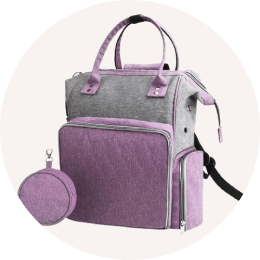
To make knitting more accessible, keep a portable kit with you. Small projects, like hats or scarves, are perfect for on-the-go crafting. If you’re looking for convenient options, Hooks & Needles offers crochet and knitting kits that are easy to carry and simple to start.
Monitoring Your Stress and Mood Changes
Paying attention to how knitting affects your mental and physical state can help you stay motivated. Start by noticing physical changes - knitting often encourages deeper breathing and reduces muscle tension, creating a sense of calm.
Emotionally, many knitters report feeling more centered and clear-headed after a session. Surveys show that knitting can consistently improve mood and even foster a sense of accomplishment. Consider keeping a photo collection of your finished projects as a visual reminder of your progress and the joy your craft brings.
These small reflections can reinforce the positive impact knitting has on your mental health.
Dealing With Frustration and Perfectionism
Frustration and perfectionism are common hurdles when building a knitting habit, but they don’t have to hold you back. Instead of aiming for perfection, focus on the process itself. Interestingly, 65% of people take up knitting primarily for stress relief, not to create flawless pieces.
When mistakes happen, try “tinking” (knitting backward) to fix them calmly rather than unraveling entire rows. This approach helps you see errors as part of the journey rather than setbacks. Some knitters even embrace the idea of a "humility stitch" - intentionally leaving a small imperfection to remind themselves that mistakes are part of being human.
A dropped stitch isn't failure - it's a pause. And that in itself is a beautiful lesson in self-compassion.
If you find yourself feeling discouraged, revisit past projects or switch to a simpler pattern. Remember, every knitter faces a learning curve, but as the motions become second nature, the act of knitting naturally creates a meditative, calming rhythm. As Elizabeth Thorpe, founder of Woodboogah, wisely puts it:
It doesn't matter where you begin or how you begin, just start knitting and have fun.
Knitting isn’t about perfection - it’s about finding joy in the process and giving yourself the grace to grow.
Making Knitting Part of Your Everyday Routine
Once you've established a regular knitting practice, the next step is weaving it into your daily life - especially during those hectic or stressful moments when it can help the most. The beauty of knitting lies in its portability; you don’t need a dedicated studio or special setup. With a few thoughtful adjustments, knitting can become your go-to activity for unwinding, no matter where you are. By incorporating knitting into everyday moments, you can amplify its soothing effects. A great way to start is by choosing projects that are easy to carry and quick to work on.
Portable Projects for Busy Schedules
For knitting on the go, focus on projects that are simple to transport and fit seamlessly into your day. Small accessories like hats, scarves, or socks are excellent choices for commutes, waiting rooms, or even lunch breaks. Modular projects such as granny squares or hexagonal tiles are particularly handy. These allow you to complete one piece in about 20 minutes, giving you a satisfying sense of progress without overwhelming your schedule.
Jane Brody, personal health columnist for The New York Times, shares her approach:
I take a yarn project with me everywhere, especially when I have to sit still and listen.
This mindset turns what might otherwise feel like wasted time - like waiting in line or riding the subway - into opportunities to relax and create. If you’re unsure where to begin, Hooks & Needles offers crochet and knitting kits that are perfect for travel and easy enough for beginners to enjoy.
Setting Up a Comfortable Crafting Area
While portability is a plus, having a cozy spot at home for knitting can make the experience even more rewarding. You don’t need a whole room - just a comfy chair, good lighting, and a small basket or bag to keep your supplies organized. This creates a space that signals to your mind: it's time to relax. A well-prepared area can enhance the calming rhythm of knitting.
You can make this space even more inviting by adding small rituals. Light a candle, brew your favorite tea, or let in some fresh air and natural sounds. Some knitters even set up their space to allow for standing while working, which can help reduce stiffness. For an added layer of relaxation, consider making your crafting area tech-free to avoid distractions and fully immerse yourself in the moment.
Once your space is ready, you can elevate the experience by pairing knitting with other relaxing activities.
Pairing Knitting With Other Relaxation Methods
Knitting doesn’t have to be a solitary or silent activity. Many crafters find that combining it with other calming practices enhances the stress-relief benefits. Try knitting while listening to soft music, nature sounds, or a favorite podcast. The rhythmic motion of your hands paired with soothing audio can create a deeply relaxing experience.
You can also knit while engaging in passive activities like watching TV, sitting by a cozy fire, or chatting in a “knit-and-natter” group. When paired with other forms of relaxation, knitting becomes even more enjoyable. The goal is to make it feel less like a task and more like a comforting ritual you eagerly anticipate.
Ready to bring knitting into your daily routine? Check out our curated crochet and knitting kits at Hooks & Needles, designed with portability and stress relief in mind. These kits include soft yarns, clear instructions, and all the tools you need to make crafting a seamless part of your day.
FAQs
How does knitting help with stress relief compared to meditation?
Knitting provides a soothing escape much like meditation, thanks to its ability to trigger the body's natural relaxation response. The rhythmic, repetitive motions involved in knitting can help slow your heart rate, ease muscle tension, and lower stress hormones like cortisol. This creates a calming effect that mirrors the benefits of mindfulness practices, such as focused breathing.
What makes knitting unique is its hands-on, creative nature. Unlike meditation, which emphasizes stillness and inward focus, knitting keeps your hands busy with a purposeful task. This blend of relaxation and productivity offers a sense of structure and accomplishment. For those who struggle with sitting still, knitting becomes an inviting alternative, combining calmness with the joy of crafting something tangible and beautiful.
What are the best yarns and tools for beginners looking to relax through knitting or crocheting?
For those just starting out and looking to relax, a soft, medium-weight yarn - such as an acrylic or cotton blend - is a great choice. These yarns are smooth, easy to handle, and less prone to splitting, which helps create a steady, calming rhythm as you work. Pair your yarn with larger needles (US size 8–10) or ergonomic crochet hooks that feature cushioned grips. These tools can reduce hand strain, making the experience more comfortable and enjoyable.
Hooks & Needles provides a carefully chosen range of beginner-friendly yarns and tools to ensure your first projects are both soothing and rewarding. Whether you're knitting a simple scarf or crocheting a cozy blanket, the gentle motions and soft textures can help you feel more grounded and relaxed.
Can knitting or crocheting help reduce stress and anxiety?
Engaging in fiber arts like knitting or crocheting can be a great way to relieve stress and calm your mind. The steady, repetitive movements often create a soothing rhythm, much like meditation, while the concentration required helps quiet those swirling thoughts. Finishing a project can also bring a sense of achievement, which naturally lifts your spirits.
Some people take it a step further by adding mindfulness to their crafting. Paying attention to the softness of the yarn or the gentle sound of needles clicking can make the experience even more relaxing. Whether you're working on a simple scarf or a detailed pattern, these activities offer a peaceful way to care for your mental well-being.