Italian wool stands apart with its rich history and craftsmanship. From Biella, Italy - home to centuries of textile expertise - this wool is made with care, using fine fibers, Alpine water, and sustainable methods. Compared to store-brand yarns, Italian wool offers unmatched softness, durability, and performance. While it costs more, the quality and longevity make it a smart choice for crafters who want their projects to last.
Let’s explore what makes Italian wool special and why it’s a step above standard yarns.
How Italian Wool Is Made
Italian wool originates from renowned regions like Biella and Prato, with Prato alone accounting for approximately 3% of Europe's textile production. This region boasts around 2,500 firms that oversee every stage, from raw fleece to the final yarn. Let’s dive into how this luxurious yarn is crafted.
The journey starts with selecting the finest fibers. Italian mills prioritize premium materials like Merino and cashmere, often choosing back fleece for its long and clean fibers. This careful selection ensures top-notch quality without cutting corners that could affect the texture. The finishing stage, however, is where Italy's craftsmanship truly stands out. As Lanificio Zignone puts it:
Finishing is the most important phase of the entire production process, where precision is the priority to achieve the pleasure and comfort we are looking for in a piece of clothing.
Understanding Fiber Micron Counts
The diameter of a wool fiber, measured in microns, determines its softness - lower numbers mean finer, softer yarn. Italian wool typically falls within the "Superfine" range of 16 to 19.5 microns. In contrast, standard store-brand yarns often use medium-grade wool with diameters between 25 and 30 microns or higher.
This difference significantly impacts comfort. Finer fibers bend easily, creating a soft, smooth feel against the skin, while thicker fibers can feel rough or scratchy. The table below highlights how Italian wool stacks up against other classifications:
| Wool Classification | Micron Measurement | Typical Use |
|---|---|---|
| Super 150's | 16.25 μm | Ultra-fine luxury garments |
| Super 140's | 16.75 μm | Bespoke suits, sport coats |
| Super 120's | 17.75 μm | Formalwear, luxury suits |
| Super 100's | 18.75 μm | High-end suits, blazers |
| Mid-grade (Corriedale) | 25–30 μm | Blankets, upholstery, knitwear |
| Coarse Wool | 35–40 μm | Carpets, rugs, heavy outerwear |
Beyond softness, finer fibers trap more air, offering excellent insulation and warmth without adding unnecessary bulk.
The Production Process
Italian mills follow a detailed process that preserves the wool's natural qualities while enhancing its functionality. It begins with scouring, where pure Alpine spring water removes lanolin and impurities, leaving the fibers soft and clean.
The next step is combing, where metal teeth align the longer fibers and remove shorter ones. This creates a smooth, even thread that resists pilling and breaking. During spinning, the aligned fibers are twisted and strengthened to ensure durability. Many Italian mills use multi-ply construction with moderate twisting, striking a balance between softness and structural strength.
The finishing stage involves controlled heat and pressure to enhance the wool’s softness, crease resistance, and durability. This process also maintains the wool’s natural crimp - a wave-like structure that adds elasticity and helps garments stretch comfortably while returning to their original shape. Many high-quality Italian yarns carry certifications like RWS (Responsible Wool Standard) and GOTS (Global Organic Textile Standard), ensuring ethical sourcing and environmentally conscious production. This painstaking process is the foundation of Italian wool’s exceptional performance.
Italian Wool vs. Store-Brand Yarn: Performance Comparison
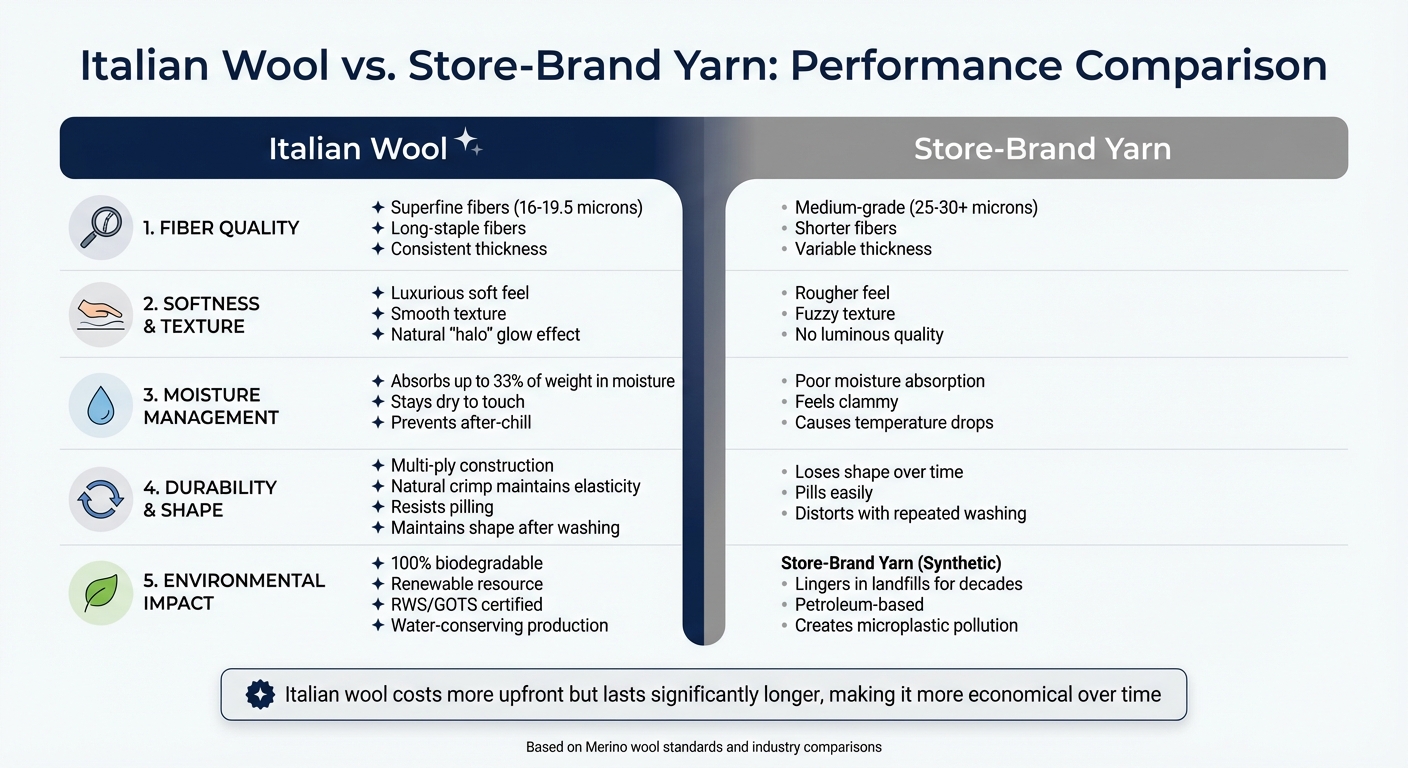
Italian Wool vs Store-Brand Yarn: Quality Comparison Chart
Now that we’ve explored how Italian wool is crafted, let’s dive into how it stacks up against typical store-brand yarns. The differences aren’t just skin deep - they become even clearer with regular use.
Softness and Feel
Italian wool is prized for its superfine fibers, which feel incredibly soft against the skin. These fibers are consistently thick throughout the yarn, creating an even, luxurious texture. Italian mills use long-staple fibers, which result in smoother and stronger yarns with fewer weak points. This also contributes to what artisans call a "halo" effect - a soft, luminous glow enhanced by small-batch, hand-dyeing techniques. In contrast, store-brand yarns often rely on shorter fibers, leading to a rougher, fuzzier texture. This difference is especially noticeable in garments like sweaters and scarves that are worn close to the skin.
Beyond its softness, Italian wool also stands out for its ability to regulate temperature effectively.
Temperature Control and Moisture Management
Italian wool offers a level of temperature regulation that store-brand synthetic yarns simply can’t replicate. Thanks to its unique dual-layer fiber structure - hydrophobic (water-repelling) on the outside and hydrophilic (water-absorbing) on the inside - it can absorb up to one-third of its weight in moisture vapor without feeling damp.
Merino wool, in particular, is exceptional at managing moisture, keeping wearers dry and comfortable. As John Roberts, Managing Director at Woolmark, explains:
With wool's structure designed by nature to enhance wearer performance, it responds in real time to changing physiological needs. It automatically keeps athletes close to their comfort zone.
Store-brand synthetics, on the other hand, often feel clammy during wear and can cause "after-chill" - a sudden drop in body temperature when activity stops. Italian wool prevents this by maintaining a consistent, comfortable temperature, adapting to your body’s needs. Whether you’re on the move or at rest, its dynamic breathability works to manage heat and moisture while preserving warmth when needed.
Shape Retention and Durability
Italian wool doesn’t just feel and perform better - it also holds its shape far longer than store-brand alternatives. Its carefully engineered twist and multi-ply construction strike a balance between softness and structural integrity, ensuring the yarn remains durable and lofty. Wool fibers naturally resist wear and tear, helping garments maintain their form even after repeated use.
The long-staple fibers used by Italian spinners create a uniform yarn with minimal inconsistencies. This consistency results in fabric that stays in shape under stress, unlike store-brand yarns, which often pill or distort over time. Italian mills also avoid excessive processing that could weaken the wool’s natural crimp - the wave-like structure that gives elasticity and helps garments bounce back to their original form after stretching.
In contrast, store-brand yarns, especially those blended with polyester or acrylic, may appear sturdy at first but often lose their shape with repeated washing. Italian wool’s resilience, paired with refined finishing techniques, ensures that your finished projects look just as stunning after dozens of wears as they did on day one.
Environmental Benefits of Italian Wool
Italian wool stands out not only for its high quality but also for its eco-friendly attributes. As a natural, renewable fiber, wool is grown by sheep as part of their protective coat. After being sheared - usually during spring or summer - the sheep regrow their fleece for the next year, creating a sustainable cycle that relies minimally on synthetic or petroleum-based materials.
Unlike synthetic yarns, which can linger in landfills for decades and contribute to microplastic pollution, wool is fully biodegradable. It breaks down naturally, enriching the soil with nutrients instead of leaving behind harmful residues.
Italian wool producers have gone the extra mile in prioritizing environmental responsibility. In the Biella region, known for its 800-year tradition of wool craftsmanship, mills have adopted advanced water and air conservation technologies. Many producers also avoid chemical-intensive processes like Superwash treatments, which are commonly used to make wool machine-washable. Some collections even feature botanical dyes derived from natural sources such as chestnut and mimosa, reducing reliance on synthetic dyes.
The Prato district in Tuscany has emerged as a leader in textile recycling and circular production. Here, artisans focus on minimizing waste by crafting items in their final forms, eliminating the need to cut from larger fabric pieces.
Wool’s natural antibacterial properties further enhance its sustainability by reducing the frequency of washing, which saves both water and energy over the garment's lifespan. Paired with certifications like the Responsible Wool Standard (RWS) and Oeko-Tex Standard 100, Italian wool offers an environmentally conscious choice for those who value sustainable crafting.
sbb-itb-f7119e8
What to Make with Italian Wool
Italian wool is a standout choice for a variety of projects, thanks to its softness, durability, and timeless comfort. Whether you're crafting a cozy garment or an accessory with a sophisticated drape, this wool consistently delivers both quality and elegance.
Sweaters and Cardigans
Italian Merino wool is a top pick for sweaters and cardigans, offering a luxurious softness that feels gentle on the skin. Its natural crimp works like a tiny spring, allowing garments to stretch with movement and return to their original shape, reducing sagging over time. Unlike coarser wools, its fine fibers provide warmth without the itch, making it perfect for layering pieces that keep you comfortable all day long.
"Choosing an Italian wool sweater means wearing a garment that will not only keep you warm during winter but will also last a long time without losing its beauty."
This blend of comfort and longevity makes Italian wool a smart choice for wardrobe staples you’ll reach for season after season.
Scarves, Shawls, and Accessories
The smooth, lightweight nature of Italian wool creates accessories with an elegant drape and fluid movement. Scarves and shawls made from these finely spun fibers are warm yet never bulky, making them both practical and stylish. Additionally, the artisanal hand-dyeing techniques used on Italian yarns result in vibrant, layered colorways with a luminous finish that mass-produced yarns simply can't replicate. These qualities also make Italian wool perfect for crafting everyday home accents with a touch of luxury.
Socks and Home Items
Italian wool’s breathability, moisture-wicking abilities, and odor resistance make it a natural fit for socks and high-use home items like blankets. Its fibers can absorb up to 30% of their weight in water without feeling damp, ensuring your creations stay comfortable and fresh. Plus, the antibacterial properties of this wool help extend the life of your pieces while reducing the need for frequent washing.
From cozy clothing to practical home essentials, Italian wool proves its worth across countless applications. Ready to bring your ideas to life? Check out our crochet and knitting kits to experience the unmatched quality of Italian wool.
Shop Italian Wool at Hooks & Needles
At Hooks & Needles, we’ve handpicked a selection of premium Italian wool that reflects centuries of Italian textile expertise. This luxurious fiber offers a softness and durability you won’t find in typical mass-market options.
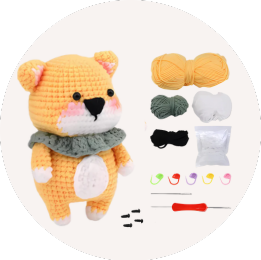
Whether you’re new to crafting or a seasoned pro, our crochet and knitting kits are designed to make your projects shine. Each kit pairs high-quality Italian wool with perfectly matched patterns and tools, ensuring you have the right weight and quantity for stunning results. These thoughtfully curated bundles make it easy to create beautiful, long-lasting pieces with confidence.
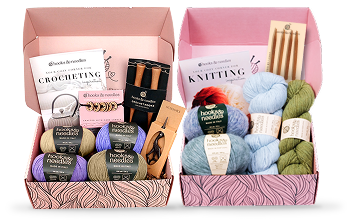
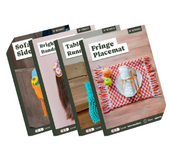
Looking to expand your skills and collection? Our monthly subscription box delivers over $120 worth of premium Italian yarns, exclusive patterns, and step-by-step tutorials - all for just $34.97 a month. It’s a simple way to try new techniques, experiment with vibrant colorways, and enjoy the luxury of fine fibers.
Explore our premium yarns, tools, and accessories crafted specifically for Italian wool projects. From precision hooks and needles to finishing supplies, every item is chosen to help you achieve the quality and longevity that Italian wool deserves.
Discover the difference that Italian wool can bring to your creations - browse our collection today and craft heirloom-quality pieces that stand the test of time.
FAQs
Why is Italian wool more durable than other yarns?
Italian wool is renowned for its durability, thanks to the careful craftsmanship involved in its production. The fibers are chosen with care, prioritizing longer and finer strands to ensure superior quality. These fibers are then washed in pristine mountain spring water, a process that enhances their elasticity, and dyed using premium, long-lasting colorants.
This meticulous process creates yarn that is both strong and resilient. It retains its beauty and structure over time, making it an ideal choice for projects that need to withstand frequent use while maintaining a luxurious appearance.
What makes Italian wool feel so soft and luxurious?
The softness and luxurious feel of Italian wool largely depend on its micron count, which measures the thickness of the fibers. Finer fibers, with a lower micron count, create a smoother, softer texture that feels gentle on the skin. On the other hand, fibers with a higher micron count are thicker and can feel rougher to the touch.
Italian wool stands out for its incredibly fine fibers, making it a favorite for projects where comfort and quality matter most - like baby blankets, scarves, and sweaters. If you're aiming to craft something extra special, Italian wool delivers a premium touch that's hard to beat.
What makes Italian wool more eco-friendly than other yarns?
Italian wool is an excellent eco-conscious option, crafted from natural, renewable fibers that break down naturally and avoid harmful chemicals. Many farms supplying this wool focus on animal welfare and environmentally responsible practices, keeping their ecological footprint small.
What sets Italian wool apart is its reliance on localized supply chains. Most of the spinning, dyeing, and packaging happens within Italy, cutting down on transportation emissions and preserving traditional, energy-efficient techniques. On top of that, many Italian yarns adhere to strict certifications like GOTS (Global Organic Textile Standard) or RWS (Responsible Wool Standard), ensuring limited chemical use, water conservation, and reduced waste.
Opting for Italian wool means choosing a material that blends exceptional quality with a strong environmental ethos, making it a fantastic choice for sustainable knitting and crochet projects.