Short answer
- Photograph the sealed box, the shipping label and every damaged item before you unpack anything else.
- Keep the outer carton and all padding until the claim is closed — carriers often ask to see it.
- Email support within a few days of delivery with your order number, the photos, and a list of which items are affected.
- Crushed skeins usually recover once wound; wet yarn and a cracked hook do not. Say which one you have.
You open the box, and one skein has a dark stain spreading across half of it. The pattern booklet has gone wavy at the corner. You pull the yarn out anyway, wind it, cast on, and get four rows into a sweater front before you accept that the damp skein smells faintly of a wet garage and the colour has bled unevenly along a metre of yarn. Now you have a partially worked piece, a skein you cannot use, and no photograph of how any of it arrived.
That is the expensive version. The cheap version takes about four minutes at the doorstep and costs you nothing but the patience to not tear into the box straight away. Below are the six things to do, in the order they actually matter, whether the problem is a soaked carton, a snapped hook or a kit that is simply missing a ball of yarn.
1. Photograph the box before you open it any further
Take the pictures at the door, before the box comes inside and before you cut the tape. You want four shots: the box from the top, the box from the side showing any crushing or water marks, a clear shot of the shipping label with the tracking number readable, and a wider frame showing the box next to something for scale.
Then open it and photograph the contents as they sit, still packed. Do not lift anything out first. A picture of yarn nested in soaked padding tells a claims handler something that a picture of the same yarn on your kitchen table cannot.
Only after that should you unpack properly, laying items out and photographing each damaged one individually against a plain surface.
What goes wrong here
The two mistakes that cost people a resolution are both about tidying up too early. The first is binning the outer carton and the padding — couriers frequently want evidence of how the parcel was packed, and once it is in the recycling the claim narrows to your word. The second is washing or drying a damp item before it has been documented.
Both feel like sensible housekeeping. Both remove the proof.
2. Tell carrier damage apart from packing damage
Crushed corners, punctures, tyre-tread marks and water staining on the outside of the carton are carrier damage — something happened in transit. That matters because it routes differently and because a courier claim usually has a tighter reporting window than a straightforward replacement request.
A box that arrived intact but whose contents shifted, split or leaked is a packing issue. So is a missing item, a wrong colourway, or a tool that arrived already cracked inside its sleeve. These sit entirely with the sender and generally resolve faster because no third party has to be involved.
You do not have to diagnose it perfectly. But saying "the outer box was soaked through on one side" instead of "my yarn was wet" saves a round of emails and often a week.
The box looks fine but the skeins are squashed flat — is that even damage?
Usually not, and it is worth knowing before you write in. Yarn is compressed deliberately for shipping, and a flattened skein springs back once you wind it into a ball and let it rest overnight. If the fibre has recovered its loft and the yarn runs smoothly off the ball, nothing is wrong with it. Report it only if the strand itself is felted, matted or crushed into a permanent crease.
3. Check the tools and the pattern, not just the yarn
Yarn draws the eye, so the small things get missed. Go through the kit item by item and check each one against the contents list before you email anyone, because a second email two days later saying "actually the yarn needle is missing too" restarts the clock on your resolution.
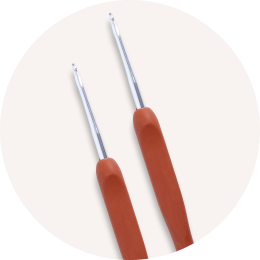
A cracked hook is not a cosmetic complaint. A hairline split along the shaft catches the yarn on every stitch and shreds a plied yarn within a row, so flag it even if the hook still technically works. The same goes for a needle tip with a burr you can feel with a fingernail.
Small plastic notions are the easiest thing to lose in transit because they slip out of a torn bag and hide in the padding — shake it out before you declare a  Plastic Yarn Needles 20pcs missing from the kit.
4. Report a Hooks and Needles damaged shipment with the right details
Write in within a few days of delivery. Waiting three weeks does not automatically void anything, but it makes carrier claims much harder and it means you are describing damage from memory rather than from a box still sitting in your hallway.
Put everything in the first message. A useful report contains your order number, the delivery date, the tracking number, a one-line description of the outer packaging condition, a numbered list of affected items, and the photographs attached rather than described.
Be specific about the item, not the feeling. "Two 50g skeins in the burgundy colourway are wet through and smell musty; the third is dry" gets acted on. "The yarn is ruined" gets a reply asking which yarn, how much, and in what way.
State what you would like to happen, too. Replacement of the affected items is the most common outcome, but if you are halfway through a deadline project and a replacement will not arrive in time, say so — it changes what is offered.
5. Know what a resolution can look like before you ask
There are usually three shapes a fix takes. A replacement of the damaged items only, a replacement of the whole kit, or a refund. Which one is appropriate depends less on how upset you are and more on whether the project can still be completed with what survived.
Dye lots are the deciding factor with yarn. If three of five skeins are unusable, a partial replacement risks arriving from a different batch, and a subtle shade shift halfway up a sleeve is far more visible in a finished garment than it is in the ball. In that case, ask for the full set. This is also why it is worth reading up on how the Hooks & Needles money-back guarantee works before you decide what to request.
What goes wrong here
People accept a partial replacement to be polite, then discover the shade mismatch six hours of crochet later. Others start the project on the undamaged skeins while the claim is open, which removes the option of a full-kit swap because the original is no longer intact.
Hold off on casting on until you know what is coming. One day of patience protects the whole project.
6. Keep the project moving while the replacement travels
You do not have to sit idle. Swatch with a spare yarn of the same weight category and check your gauge — the number of stitches and rows you get over ten centimetres — against the pattern. Getting that right before the new yarn arrives means you start the real piece already knowing which hook or needle size you need.
If a hook was the casualty and you have a substitute in the same size, work the swatch with it. If the kit called for a chunky weight and your substitute is a size off, the fabric will tell you: too tight and it stands up on its own, too loose and the stitches gape. A set like these  Large Crochet Hooks for Chunky Yarn covers the bigger sizes that most household hook sets skip.
Read the pattern all the way through while you wait, including the finishing section. Knowing that row 40 introduces short rows is much less alarming when you meet it having already read about it. Other stitchers are a good sanity check here too, and there is a guide to finding your way into the Hooks & Needles community if you want a second opinion on a chart.
Ready to start a project you will actually finish?
Hooks & Needles delivers a complete yarn project to your door every month — coordinated yarn, the right hooks or needles, and a pattern written to be followed rather than decoded. Pause or cancel whenever you like.
Use LEARN20 for 20% off your first box

The Short Version
The whole process rests on one habit: document first, unpack second. Everything after that is admin, and admin goes quickly when the evidence already exists.
Most box problems resolve into a replacement within a normal shipping cycle. The ones that drag on are almost always the ones reported late, reported vaguely, or reported after the packaging went out with the recycling.
What to remember
- Four photos at the door — box top, box side, label, contents still packed — before anything is lifted out.
- Keep the carton and padding until you are told the claim is closed.
- Report within a few days, in one message, with order number, tracking number and a numbered list of affected items.
- Ask for a full-kit replacement rather than a partial one when dye lot matching matters to the finished piece.
- Do not cast on with the surviving yarn until the resolution is agreed.
FAQ
I already threw away the box before I noticed the damage. Is it too late?
No, but the route changes. Without the outer packaging a courier claim is difficult, so the conversation becomes a straightforward request to the sender rather than a transit claim. Photograph the damaged items themselves in as much detail as you can, note the delivery date, and be honest that the packaging is gone — it is a common situation and being upfront about it is faster than being vague.
Only one skein is damp and the rest are fine. Should I still report it?
Yes, and do it before you start the project. One skein short is often the difference between finishing a sleeve and not, and a replacement requested at week one arrives while you are still working the body. If the yarn is a solid colour used across the whole garment, mention the dye lot number printed on the band so the replacement can be matched.
Can I start knitting or crocheting while I wait for the replacement?
Swatch, yes. Start the actual piece, no. Once you have wound and worked the undamaged skeins, the kit can no longer be swapped as a set, which removes your best option if the replacement yarn turns out to be from a different batch. Use the waiting time to check gauge, read the pattern through and sort your stitch markers.
What if the replacement arrives damaged as well?
Follow the same steps, and say clearly in your message that this is the second damaged delivery for the same order. Repeat damage on the same route usually points to a handling problem at a specific depot, and flagging it that way tends to change how the parcel is packed or routed the next time rather than just producing another identical shipment.