Short answer
- Heathered yarn is made by blending dyed fibres together before spinning, so the flecks of colour sit inside the strand rather than on its surface.
- Those flecks break up the shadow that makes a cable legible — fine cables, twisted stitches and lace read as noise, while deep relief and large-scale texture still show.
- Tweed, marl and heather are three different constructions and they hide stitches in three different ways.
- Swatch the actual stitch pattern, photograph it in flat light, and look at the photo from arm's length. If the pattern vanishes there, it will vanish in the garment.
You finish the front panel of a cabled cardigan. Eleven hours of six-stitch crossings, every one of them counted. You block it, drape it over the back of a chair, walk to the other side of the room and turn around — and the cables are gone. Hold the fabric an inch from your eye and you can find them. From two metres away it is a slightly bumpy grey field.
Nothing went wrong with your crossings. The gauge — the number of stitches and rows in a measured square of fabric — matched the pattern. The problem was the yarn: a soft heathered charcoal that scatters light in every direction and leaves your cables without the shadow they need to be seen. Once you know which stitches survive that and which don't, heathered yarn becomes a deliberate choice rather than a gamble.
1. What Heathered Yarn Actually Is
Heathered yarn starts before the spinning does. Fibres dyed in two or more shades are carded together into one blended mass, then spun, so every plied strand carries a soft mixture of colours through its whole thickness. Break the strand and the flecks are still there in cross-section. That is the difference that matters.
The visual result is a colour that never fully settles. A heathered oatmeal is white fibre plus brown fibre plus a whisper of grey, and your eye averages them into something warmer and deeper than any flat dye could produce. It is the reason heathers photograph well and read as expensive.
It is also the reason they eat stitch definition. Your eye recognises a cable by reading light on the raised edge and shadow in the groove beside it. Heathering adds a second layer of light and dark that has nothing to do with the fabric's surface, and the two signals compete.

From the Hooks & Needles shop
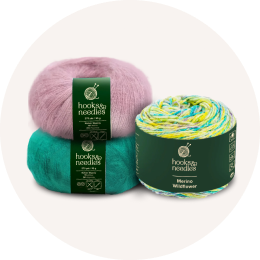
Timeless Tones Heathered Yarn
A worked example of the blend described above — soft depth in the colour, which is exactly why it wants a bold texture rather than a fine one.
2. Tweed, Marl and Heather Are Not the Same Thing
Tweed yarn has contrast fibre stuck to the outside of the strand as slubs — small, dense nubs of a different colour. The base yarn underneath is usually near-solid, so your cables still cast a clean shadow and the flecks sit on top of them like confetti. Tweed hides fine detail less than a heather of the same colour depth.
Marled yarn is two or more plies of different solid colours twisted together. Look closely and you can see the individual strands spiralling around each other. That spiral creates its own diagonal rhythm, which fights specifically with diagonals in your fabric — travelling stitches and shallow cables get lost, while horizontal ridges like garter stitch survive well.
Heather is the subtlest of the three and the most thorough. Because the colour mixing happens at the fibre stage, there is no clean colour anywhere in the strand to catch a highlight.
Does a heathered acrylic behave the same as a heathered wool?
Not quite. Acrylic heathers are usually blended from solution-dyed fibre and tend to have a shinier, more uniform look, which flattens texture further because the sheen bounces light off the whole surface at once. A heathered wool has scale-covered fibres that hold a crease and give you a little more relief to work with.
Fibre content changes the outcome as much as the colour construction does, and it is worth knowing whether your flat-looking swatch is the heathering or the fibre. The trade-offs between plant and animal fibres versus acrylic show up in stitch definition long before they show up in wear.
3. The Cable Test: Two Yarns, One Legible Panel
We knitted the same panel twice: a six-stitch left cross every eighth row, forty stitches wide, on 5mm needles. Same worsted weight, same gauge at 18 stitches to 10cm, same blocking. One yarn was a flat solid, the other a mid-tone heather from the same weight category.
At 30cm both panels are perfectly readable. At one metre the heathered cable starts to soften. At two metres — the distance anyone actually sees a sweater from — the solid panel still shows a rope, and the heathered panel shows a texture you cannot name. The cable is physically identical. The information has gone.
What goes wrong here
Two reflexes make it worse. The first is going up a needle or hook size to "open the fabric up", which loosens the stitches, shallows the grooves and removes the last of the relief. The second is assuming the crossing technique is at fault and re-knitting the panel in the same yarn.
Weight matters here too, because a heavier yarn gives you a physically deeper groove for the same stitch count. If you are choosing between two thicknesses for a textured piece, the practical differences between yarn weight categories decide more about legibility than the stitch pattern does.
4. The Textures That Still Read
Depth beats detail. Anything that creates a bold, high-contrast change in surface height survives heathering; anything that relies on a single stitch leaning a particular way does not. That one rule sorts most stitch patterns for you.
These hold up well in a heather:
- Garter stitch and deep ribbing — long horizontal or vertical ridges, read as stripes of light and shade.
- Wide cables, eight stitches and up — enough width to throw a real groove either side.
- Bobbles and popcorn stitches — they stand off the fabric far enough to be unmistakable.
- Basketweave and moss stitch — blocky, large-scale contrast rather than fine line work.
- Post stitches and front-post relief in crochet — provided the raised elements are grouped, not single.
- Brioche — the deep columns of this two-colour-capable knitted rib survive because the valleys are genuinely deep.
These disappear: fine two-stitch cables, twisted stitch panels, single crossed stitches, most yarnover lace with small repeats, seed stitch at fingering weight, and single crochet worked into the back loop for a subtle ridge. All of them depend on differences of a millimetre or two, which the flecks simply overwrite.
For a piece where the stitch pattern is the point — a lace shawl, a fine cable hat, a crochet motif with delicate post work — reach for a flat solid instead. A smooth mercerised cotton like  Cotton Blossom Yarn holds a crisp edge and gives every stitch its own shadow.
5. Heathers in Colourwork: Check Value, Not Colour
Heathers make superb blending colours in stranded knitting and tapestry crochet. Because each strand already contains several shades, a heather sitting between two solids softens the join between them and makes a colour transition look gradual rather than stepped. Traditional Fair Isle palettes lean on this constantly.
Where it fails is contrast. Colourwork depends on value — how light or dark a colour is, independent of hue — and heathering pulls everything toward the middle of the value range. A heathered navy and a heathered forest green can look strikingly different in the skein and merge into one murky field once they are knitted next to each other.
What goes wrong here
The common error is choosing a heather for the motif and a heather for the background. Even with a wide difference in hue, the motif blurs. Pick one of the two to be a flat solid — usually the motif — and the pattern snaps back into focus.
Before you cast on, photograph the two balls side by side and convert the photo to greyscale on your phone. If you cannot tell the two greys apart at a glance, your colourwork will not read either, and no amount of neat tension will fix it.
6. Swatch Like You Mean It
A gauge square in stocking stitch tells you nothing about legibility. Swatch the actual stitch pattern — at least two full repeats wide and two tall — and block it the way you will block the finished piece. Blocking means wetting or steaming the fabric and drying it to shape, and it changes relief significantly.
Then do the distance test. Pin the swatch to a wall, walk five paces back, and look. Photograph it in flat, dim light rather than bright sun, because harsh side light exaggerates shadow and flatters the swatch in a way daily wear will not.
Fibre treatment plays into this as well. A yarn that has lost some of its natural spring holds less height in a cable and blurs faster in a heather — the trade-offs of superwash treatment include exactly that softening of stitch memory.
Ready to start a project you will actually finish?
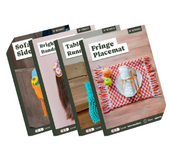
Hooks & Needles delivers a complete yarn project to your door every month — coordinated yarn, the right hooks or needles, and a pattern written to be followed rather than decoded. Pause or cancel whenever you like.
Use LEARN20 for 20% off your first box

Before You Start
Match the yarn to the job. Heathers give colour depth and hide small tension irregularities, which makes them generous for large plain areas, simple garments and anything worked in one long stretch of fabric. They are a poor partner for detail you spent hours on.
If the pattern's whole appeal is its stitch pattern, that is the moment for a flat solid. If the appeal is the colour, let the heather carry it and keep the texture bold.
What to remember
- Heathering blends colour through the strand, so it competes with the light and shadow that makes texture legible.
- Tweed keeps its flecks on the surface and marl twists solid plies — both hide less detail than a true heather.
- Keep textures deep and wide: garter, wide cables, bobbles, basketweave, brioche, grouped post stitches.
- Skip fine cables, twisted stitches and small-repeat lace in a heather.
- Go half a size down, not up, when you want cables to stand.
- Pair a heather with a solid in colourwork, and check the pair in greyscale first.
FAQ
I have already bought heathered yarn for a cable pattern. What now?
Swatch one repeat and view it from five paces before you commit to the whole piece. If the cable softens, scale it up — a pattern with eight- or ten-stitch crossings in the same weight will read where a four-stitch one will not. Failing that, switch to a garter or basketweave version of the project and keep the yarn.
Will going up a needle or hook size make the texture show more?
No, it does the opposite. A looser fabric has shallower valleys between stitches, so there is less shadow for your eye to read. Try half a size down and accept the slightly firmer fabric, then re-check your gauge against the pattern and adjust size if the numbers have shifted.
Which heathered colourways hide texture least?
Light and mid-tone heathers with a narrow spread between their component shades — a pale oatmeal or a soft sage — keep more definition than dark, high-contrast blends. Charcoals and deep navies are the worst offenders, because the fabric is already dark enough to swallow its own shadows.
Can I use a heather and a solid together in one project?
Yes, and it is often the best solution. Keep the weight and fibre content close so the two behave the same after washing, then let the heather sit in the plain areas and the solid carry the cables, ribbing or colourwork motif. Wash a small joined swatch first to confirm neither shrinks more than the other.
Does blocking bring lost definition back?
Blocking sharpens stitches and evens out tension, and a steam block on a woolly, non-superwash yarn can add real height to cables. What it cannot do is add value contrast, so a pattern that has vanished into the flecks will still be missing after blocking. Judge the swatch blocked, not unblocked.