Short answer
- Argyle is intarsia, so a single-layer panel has a front and a back — never two fronts. Every colour join and every diagonal carry shows on the reverse.
- The cheapest fix in time is a two-layer scarf: one intarsia panel plus one plain garter panel, seamed. Budget roughly double the yarn and 60–90 minutes of mattress stitch on a 150 cm scarf.
- If you plan to double the fabric, work in DK or lighter — around 22–24 stitches per 10 cm. Worsted doubled makes a scarf that will not fold under a coat collar.
- Non-superwash wool grips at the joins and blocks flat. Slippery superwash, silk and bamboo blends let the diamond edges gape open no matter how carefully you join.
Two argyle scarves sit on the table, knitted from the same 44-stitch chart in the same navy, cream and rust DK. The first is a single intarsia panel. It looks sharp from the front and, flipped over, shows eleven yarn tails, a ladder of diagonal carries and three small holes where the colour changes pulled apart. Around a neck it twists, and the back shows within about ten minutes of walking.
The second is the same panel backed with a plain garter-stitch layer. In the hand it feels like a proper scarf rather than a swatch — denser, warmer, with weight that makes it hang straight instead of curling at the long edges. It took roughly twice the yarn and an extra evening. That difference in the hand is the whole subject of this article, and it is decided before you cast on.
Why the Back of an Argyle Scarf Looks Nothing Like the Front
Argyle is built from intarsia, which means blocks of colour worked from separate strands rather than one yarn carried across the whole row. Each diamond gets its own length of yarn. Each overlay line — the thin diagonal that crosses the diamonds — gets its own length too. At every boundary you twist the old colour around the new to link the blocks, and that twist is a visible bump on the reverse.
Count the strands in one row of a two-diamond-wide scarf and you land somewhere between seven and eleven. That is seven to eleven joins per row, thirty-two rows per diamond repeat, and a tail for every strand you start and finish. On a 150 cm scarf that is several hundred joins, all of them facing the world when the scarf flips.
Stranded colourwork behaves differently, which is where the confusion starts. Fair Isle carries both colours across the back as floats, and a float can be caught and tidied. An intarsia join cannot be tidied, because it is structural — it is the only thing holding two colour blocks together.
Can I just weave in the ends so the back looks clean?
Weaving in helps with tails, but the joins themselves stay visible as a chain of twists along every diagonal. You can make the back neat and legible rather than chaotic, which is worth doing, but you cannot make it look like the front. Plan the construction instead of planning to fix it later.
None of this makes argyle a bad choice for a scarf. It makes a single-layer argyle scarf a specific decision with a known cost, and it helps to read your knitting chart and its abbreviations before you commit to a stitch count you cannot back.
Yarn Weight: The Number That Decides Whether Doubling Works
Yarn weight is the thickness category printed on the ball band — fingering, sport, DK, worsted, aran. It sets how many stitches you get per 10 cm, which is your gauge, and gauge decides both how wide your diamonds come out and how thick the finished fabric is. Doubling the fabric doubles the thickness, so the weight you pick has twice the consequence it would in a plain scarf.
What the numbers look like in practice
- Fingering, 28 stitches per 10 cm: two layers land around 4 mm thick. Drapes beautifully, folds under a collar, and a 24-stitch diamond comes out about 8.5 cm wide.
- DK, 22 stitches per 10 cm: the sweet spot. A 24-stitch diamond reads at roughly 11 cm, and two layers stay flexible.
- Worsted or aran, 18 stitches per 10 cm: a single layer is fine, doubled is not. Two layers of aran give you something closer to a placemat than a scarf.
Swatch before you trust any of this. Intarsia usually knits at a slightly different tension than plain stockinette in the same yarn, because the twist at each join pulls the fabric in. Work a 30-stitch swatch that includes at least one full colour change, block it, then measure.
Pick your scarf width from the diamond repeat rather than from a round number. A 20 cm scarf in DK is about 44 stitches, which is exactly two 24-stitch diamonds minus the shared edge — tidy. Forcing 50 stitches gives you two diamonds and a stranded sliver, and that sliver is the part that looks amateur. If you want a plain scarf to nail your tension on first, the  Vintage Scarf Knitting Pattern PDF uses the same width logic without the colour work.
Fibre Grip: Why Non-Superwash Wool Holds Intarsia Joins
Fibre grip is how much the yarn surface catches on itself. Untreated wool has microscopic scales that cling, which is exactly what an intarsia join needs — the twist stays put and the two colour blocks sit shoulder to shoulder with no gap. Superwash wool has had those scales smoothed off so it can be machine washed, and the trade is that joins slide and loosen.
Silk, bamboo and most plant-fibre blends are worse again. They are smooth, heavy and drapey, so the diamond edges open into visible slits under the weight of the scarf. A mercerised cotton argyle looks crisp on the needles and gappy after a week of wear.
Argyle does not fail because the knitting was sloppy; it fails because the yarn had nothing to hold on to.
Worth paying more for
- Non-superwash wool with good colour saturation. Deep, flat colour is what makes diamonds read from three metres away.
- Colours from one line. Same base, same weight, same shrinkage when blocked. Mixing bases means one colour blocks longer than the other.
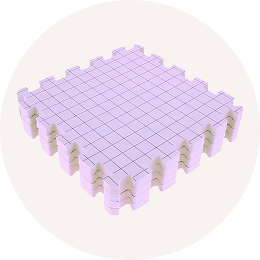
- A wool wash and blocking mats. Blocking — wetting the finished piece and pinning it to shape until dry — is what squares up the diamonds. On untreated wool it is close to permanent.
Not worth paying more for
- Hand-dyed variegated or gradient yarn. It fights the geometry. Every pound spent on tonal complexity is a pound spent blurring your diamond pattern knitting.
- Plastic yarn bobbins. Wound butterflies of about 3 m each work identically and do not clack against each other.
- Luxury silk blends for the lining layer. Nobody sees it and you want grip, not shine.
Three Constructions, Three Costs in Yarn and Time
Every honest solution is a construction decision, and each one bills you differently. Here is what the same 20 cm by 150 cm DK scarf costs under each approach, assuming about 200 g of yarn for one single layer.
One: accept the back
Knit a single intarsia panel, weave in every tail on the diagonal so the reverse looks deliberate rather than abandoned, and wear it as a single-sided piece. Cost: 200 g, no extra time beyond finishing. This works best on a short neck-scarf that stays tucked, and it is the option most argyle knitting pattern instructions quietly assume.
Two: two panels seamed
Knit the intarsia panel, then knit a plain second panel the same length and mattress-stitch them together along both long edges. Garter stitch is the right choice for the back layer because it lies flat and does not curl, the same reason garter beats stockinette on a knitted book sleeve. Cost: about 380–400 g of yarn, plus 60–90 minutes of seaming.
Three: a tube
Work the intarsia flat, then join the long edges into a closed tube so the reverse faces inward with nothing sewn to it. True intarsia cannot be worked in the round without wrap tricks that leave a visible seam line, so knitting flat and closing afterwards is the practical route. Cost: roughly the same yarn as a single layer plus a narrow underlap, and one long seam — but the inside stays hollow, so it is less warm than two layers.
There is a fourth route worth naming: double knitting, which produces two connected layers at once with the colours reversed on the back. It is not intarsia and it has no floats. It also means working every stitch twice, so expect double the yarn and close to double the hours.
Common Mistakes and the Fix for Each
Starting the diamonds at the cast-on edge. The first two centimetres roll and distort, cutting the bottom points off. Fix: work 4 cm of garter or twisted rib first, then begin the chart on a clean row.
Dropping the twist at a colour change. This leaves a hole on the diagonal, and it always shows on the side you meant to display. Fix: bring the old colour over the new before dropping it, every single change, no exceptions on the diagonals where the boundary moves a stitch per row.
Carrying the thin overlay line as a float. A 44-stitch row with a floated diagonal puckers along its whole length. Fix: give the overlay line its own small bobbin and treat it as a third intarsia block, even though it is only one or two stitches wide.
Knitting the lining panel at the intarsia gauge. The plain panel comes out longer because it has no joins pulling it in, and you end up easing 8 cm of extra fabric into the seam. Fix: knit the lining to a measured length rather than a row count, and check both panels flat against each other before seaming.
Skipping the block. Unblocked argyle has soft, wobbly diamond edges that read as mistakes. Fix: wet-block each panel separately, pin the diamond points square, and let it dry fully before you seam anything.
Ready to start a project you will actually finish?
Hooks & Needles delivers a complete yarn project to your door every month — coordinated yarn, the right hooks or needles, and a pattern written to be followed rather than decoded. Pause or cancel whenever you like.
Use LEARN20 for 20% off your first box

Where To Go From Here
Decide the construction first, then buy yarn for it. A doubled DK scarf needs close to 400 g across three colours, and finding an extra 50 g of a discontinued shade halfway through is a genuinely miserable afternoon.
Then swatch one full diamond — 24 stitches, 32 rows — including the overlay line. That single swatch tells you your real intarsia gauge, whether your yarn holds its joins, and whether you actually enjoy managing nine bobbins. Twenty minutes there saves a frogged metre later.
If you want to build the finishing skills an intarsia scarf leans on before you commit to one, a stack of smaller projects is the faster path — seaming, blocking and tension all transfer. The  10 Knitting Patterns (Sent Via Email) set gives you ten short runs at exactly those steps.
FAQ
My shop only stocks superwash wool. Can I still knit an intarsia scarf?
Yes, with one adjustment: go down a needle size from the ball band recommendation so the fabric is denser and the joins have less room to slide. Superwash also barely holds a block, so choose the two-panel construction — the seamed edges hold the shape that blocking would otherwise provide.
What if I cannot get DK weight in all three colours?
Hold two strands of fingering weight together to stand in for DK, as long as you do it for all three colours so the fabric stays even. Do not mix a true DK for the background with doubled fingering for the diamonds; the blocks will sit at different heights and the diamond edges will step.
Is acrylic a workable substitute for wool here?
Acrylic works for the plain lining panel and is fine on a budget, but it will not block. Whatever shape the diamonds have coming off the needles is the shape they keep, so knit the intarsia side in wool if you can and save the acrylic for the layer nobody sees.
I have no yarn bobbins. What can I use instead?
Wind butterflies straight onto your hand — about 3 m of yarn figure-eighted around your thumb and little finger, then tied off with the tail. They hang shorter than bobbins, which means less tangling, and you can pull more yarn out without unwinding the whole thing.
Can I crochet argyle instead, if I prefer a hook?
You can, but the technique changes name and behaviour: crochet uses tapestry crochet or intarsia crochet, and the fabric comes out thicker and less drapey than knitted stockinette at the same yarn weight. The reverse side has the same problem, so the same three constructions apply. Go a hook size down from the yarn's usual recommendation to keep the diamond edges crisp.