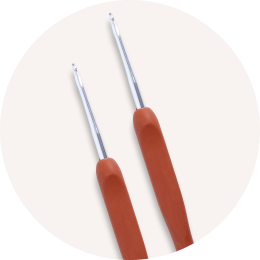
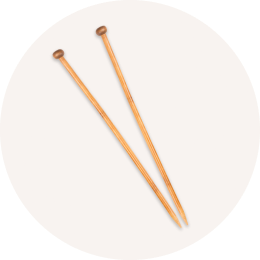
Yes — crochet hooks and knitting needles are permitted in carry-on baggage by the TSA and by most other national security agencies, including circular needles, double-pointed needles and metal hooks. The item that actually gets taken off you at the checkpoint is almost never the hook; it is the scissors in your notions pouch, or a needle so long it reads as something else on the X-ray.
So the real question is not whether you can bring your project, but which project and which kit survive a checkpoint, an overhead bin and a seat with no elbow room. Below is what to pack, what to swap out, where the rules genuinely change, and which projects fall apart the moment you try to work them at 30,000 feet.
Yes, and the Scissors Are the Real Problem
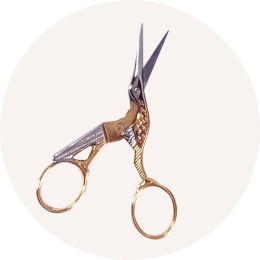
Sharp blades are the consistent sticking point. Embroidery snips and folding scissors get pulled far more often than needles do, because blade-length limits are enforced by eye and a 3-inch stork snip looks like a weapon in a tray. Leave them in your checked bag.
The replacements are small and cheap. Any of these will cut yarn cleanly enough for a travel project:
- A plastic-cased thread cutter pendant with the blade recessed inside.
- Nail clippers, which pass routinely and cut worsted weight in one squeeze.
- Dental floss — the little metal cutter on the box handles yarn up to about aran weight.
- Nothing at all: break the yarn by hand, or pre-cut your tails before you fly.
Long straight needles are the second thing worth reconsidering. A 14-inch aluminium single-point is technically allowed and still occasionally questioned, whereas a 32-inch circular with 4mm tips draws no attention at all because the tips are short and blunt.
What Changes By Country, Airline and Officer
Rules diverge once you leave your home airport. The TSA, the UK's CAA and the EU's general list all permit knitting needles in the cabin, but individual carriers can be stricter than the airport, and a handful of airlines in Asia and the Middle East have historically refused them at the gate even when security waved you through.
Two practical habits cover this. Check your airline's own dangerous-goods page rather than the airport's, and be ready to surrender the tool without argument — which is much easier when the tool is a $4 bamboo hook.
Do the same rules apply on trains, buses and cruise ships?
Trains and coaches almost never screen craft tools at all, so anything you can hold on your lap is fine. Cruise lines vary more, and a few list scissors in their prohibited-items policy, so the blade-free cutting options above are worth keeping in your kit year-round.
Material matters less than people assume. Bamboo and plastic needles are not more likely to be permitted than metal ones in the US or the EU, though they are the safer bet on a route where you suspect the crew will have an opinion.
One more variable: your project bag counts as part of your baggage allowance, not as a free extra. A bag that fits under the seat is the difference between crocheting from wheels-up and waiting for the seatbelt sign.
Want the yarn, the pattern and the guidance in one box?
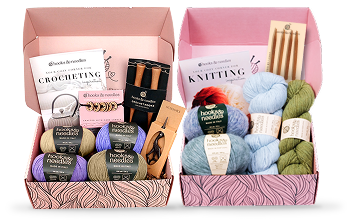
Each Hooks & Needles box arrives with the yarn, the tools and an exclusive pattern already matched to each other, plus instructions that do not skip the step you are stuck on. Nothing to source, nothing to substitute.
Use LEARN20 for 20% off your first box

Portable Crochet and Knitting Projects Travel Best in Small Sizes
The test for a travel project is whether it works in one hand's worth of space, from memory, with interruptions. That rules in far more than people expect and rules out the things most of us instinctively pack.
Projects that hold up in a seat
- Hats. One skein, worked in the round, no seaming, and the shaping is predictable enough to do while boarding.
- Socks and mitts. Small circumference, tiny footprint, and the cuff repeats are memorisable.
- Granny squares and motifs. Each one finishes in minutes, so a delay produces something complete rather than something half-done.
- Simple cowls and scarves in a textured stitch. Single crochet and moss stitch both look intentional and need no counting.
- Dishcloths and washcloths. Unglamorous, but they are the best format for practising a new stitch on a train.
What goes wrong here
The classic travel mistake is packing the sweater. A garment body is heavy in the bag, gauge-sensitive, and unforgiving of the row-counting errors that come with cabin announcements — and gauge is the part that decides whether the finished thing fits, which is exactly why working a gauge swatch before you commit belongs at home, not on a tray table.
Charted lace and stranded colourwork fail for a different reason. Both need you to hold a chart, a row position and multiple strands at once, and none of those survive an aisle trolley.
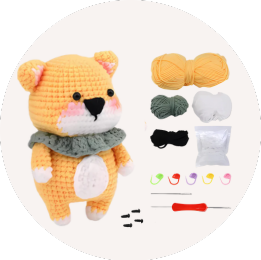
Amigurumi sits in the middle. The stitches are ideal — tight single crochet, small pieces, no gauge stakes — but stuffing takes up bag space, and losing a safety eye between seat cushions is genuinely annoying.

From the Hooks & Needles shop
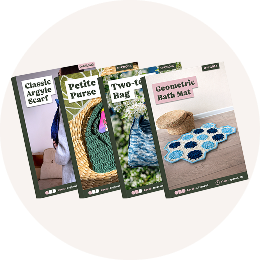
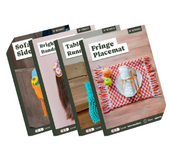
Summer Travel Crochet & Knitting Pattern Bundle
Every pattern in the bundle is sized to the one-skein, one-bag format described above, so you are choosing what to make rather than checking whether it will fit.
Packing a Travel Crochet Kit That Does Not Snag
Knitting on the go goes wrong in the bag more often than at the checkpoint. Loose hooks work their way into seams, a live project slides off its needle tips, and a full skein rolls three rows into the footwell of the row in front.
A workable kit is short. One hook or needle in the working size, one spare a size down, a tapestry needle, a few stitch markers, a blade-free cutter, and the pattern printed or screenshotted so you are not fighting airplane wifi for row 14.
What goes wrong here
Two habits cause most travel damage. Packing the whole skein instead of the amount you will realistically use, and leaving stitches unsecured — point protectors on needles and a locking marker through the working loop of crochet cost nothing and prevent the unravelling you discover at cruising altitude.
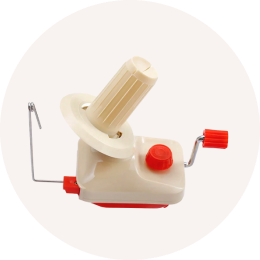
Here is the trick worth stealing: wind your yarn into a centre-pull cake, drop it in a zip bag, and feed the working strand out through the corner before you seal it. The cake cannot roll away, the yarn cannot pick up grit, and you can squash the bag flat into a seat pocket.
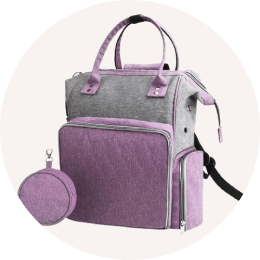
A structured bag helps for the same reason a tin helps notions — it keeps hooks from migrating. Something like the  PU Leather Knitting Crochet Tools Storage Bag keeps tools separated from the yarn, which matters more in transit than at home. If you are still assembling your notions, there is sensible advice on building a crochet toolkit gradually rather than all at once.
What To Do Next
Pick the project first, then pack the kit around it. A hat, a sock or a stack of motifs in one bag will get more actual stitching done on a trip than an ambitious garment that stays in the suitcase.
What to remember
- Hooks and needles are allowed in carry-on; scissors are what gets confiscated, so pack a nail clipper or a recessed thread cutter instead.
- Check your airline's own prohibited-items page, not just the airport's, on international routes.
- Travel with inexpensive tools — officer discretion is real and you cannot appeal it at the belt.
- Choose small-circumference, memorisable projects: hats, socks, mitts, motifs, textured cowls.
- Leave gauge-critical garments, charted lace and stranded colourwork at home.
- Secure live stitches with point protectors or a locking marker, and bag your yarn as a centre-pull cake.
FAQ
Can I bring small scissors in my carry-on if the blades are under four inches?
In the US, scissors with blades shorter than four inches measured from the pivot are permitted, but enforcement varies by officer and small craft snips are pulled regularly. If the pair matters to you, put it in checked baggage and carry a thread cutter instead.
What happens if an officer takes my needles anyway?
You will be offered the choice of surrendering the item or leaving security to check it, and there is rarely time for the second option. Slide your live stitches onto a spare length of yarn as a holder, keep the project, and buy a replacement needle at your destination.
Which yarn works best for a travel project?
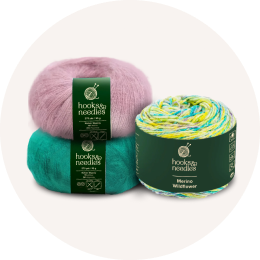
A smooth DK or worsted in a non-splitty plied construction is easiest to work in low light and awkward positions. Avoid mohair and long-haired novelty yarns, which shed onto everything in a shared cabin, and avoid anything so dark you cannot see your stitches under a dim reading light.
How do I fix a mistake I only notice hours into a flight?
Mark the error with a locking stitch marker and keep going until you are somewhere you can work calmly — unpicking rows on a tray table is how projects get worse. For knitting, a dropped stitch held on a marker will wait; for crochet, count back from the marker before you pull anything out.