Quick Summary
If you’ve ever wondered how to knit in the round without getting your needles and yarn all tangled up, you’re not alone. By the end of this post, you’ll understand the core methods—using circular needles, double-pointed needles (DPNs), and the magic loop technique—to create seamless tubes like hats and sleeves. This is perfect if you’ve nailed flat knitting and want your next satisfying challenge to be smooth and frustration-free.
Why Knitting in the Round Changes Everything
If you’ve only knit flat pieces so far, knitting in the round might feel like a big jump. The appeal? No seams. Your project becomes a smooth tube, perfect for hats, mittens, socks, and seamless sweaters. But the challenge is managing multiple needles or longer circulars without the yarn knotting or your stitches slipping off. Tackling these concerns head-on helps you gain confidence and finish projects faster.
Knitting in the round also opens up a new world of stitch patterns and shaping techniques. Once you’ve mastered the basics of circular needle knitting and DPNs, you’ll find that many patterns become more accessible, and your finished pieces look professionally neat. This natural next step fits perfectly into your knitting journey after getting comfortable with flat knitting basics on straight needles.
What You Need to Know About Circular Needle Knitting for Beginners
Circular needles are a pair of knitting needles connected by a flexible cable. They’re not just for big blankets — circular needles are perfect for knitting tubes in the round when your project circumference matches or exceeds the cable length. For smaller circumferences, you might need double-pointed needles instead.
To start, choose a circular needle with a cable length that fits your project comfortably—too long and your stitches will stretch out; too short and it’s hard to maneuver. When casting on, distribute your stitches evenly on the needle and join carefully to avoid twisting. The key is to keep your stitches snug but not tight, maintaining consistent tension as you knit around.
If you’re curious how circular knitting fits into your skill path, check out our Hooks & Needles skill progression that places this technique as a major milestone after mastering flat knitting.
Double-Pointed Needles (DPNs): When and How to Use Them
Double-pointed needles are sets of short needles with points at both ends, usually in groups of four or five. They’re ideal for knitting small tubes like sock cuffs or sleeves when circular needles aren’t practical due to the small circumference. Using DPNs means juggling multiple needles at once, which can feel intimidating at first but quickly becomes second nature.
To work with DPNs, you’ll divide your stitches evenly across three or four needles and use a fifth needle to knit. The trick is to keep your stitches secure on the needles without gaps or ladders forming between them. Maintaining consistent tension when transitioning from one needle to another is key. A common beginner hiccup is accidentally dropping stitches off the ends—something you’ll get better at avoiding with practice.
Common Mistakes + Fixes
- Twisting stitches when joining in the round: Before you start knitting, double-check that all stitches are aligned with the cast-on edge, not twisted around the needle. This prevents a spiral twist in your project.
- Ladders between needles with DPNs: Keep your tension firm when moving between needles and pull the first stitch on each needle tighter to close gaps.
- Needle tangling or yarn catching: Practice smooth yarn management and slow down your knitting speed until you’re comfortable with the rhythm.
Pro Tip
Try the magic loop method with a long circular needle (typically 32" or 40") to knit small circumferences instead of DPNs. It reduces the number of needles you handle and can feel more stable. This technique pulls a loop of cable out between stitches, creating two working needle tips. Magic loop is a versatile skill worth adding to your toolkit.
Knitting in the Round Tutorial: Step-by-Step Basics
Start by casting on the number of stitches your pattern requires on your circular needle or DPNs. If using circular needles for a small circumference, the magic loop method might be your best bet (see above). Next, carefully join in the round: confirm your stitches are not twisted and slip the last cast-on stitch to your left needle to begin knitting in a continuous loop.
Keep your yarn tension even as you knit every stitch around. It’s easy to accidentally drop stitches or create laddering if you lose focus when switching needles or moving the yarn. Practice makes perfect. For your first projects, consider simple patterns like a beanie or fingerless gloves that use only knit stitches in the round to build muscle memory.
If you want to deepen your knowledge on learning to knit more broadly and get comfortable with yarn handling, our how to learn to knit resource offers clear guidance that complements this technique perfectly.
Ready to make your next project this good?
Mrs. Quilty delivers a complete quilting project to your door every month — pre-coordinated fabric, tools, pattern, and video guidance included. Over 65,000 quilters have started their journey here. Box 1 is designed for exactly where you are right now.
Use LEARN20 for 20% off your first box

Choosing the Right Tools and Yarn for Circular Knitting
Selecting the right needles and yarn weight matters for knitting in the round. Circular needle sizes correspond to the diameter of the needle tips, measured in millimeters. Yarn weight ranges from lace to super bulky—lighter yarns suit finer needles and smaller projects, while heavier yarns work well with larger needles.
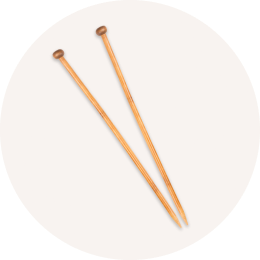
For beginners, bamboo or wood needles can help because their slightly grippy surface stops stitches from slipping off prematurely. Smooth metal needles are faster but require more control. Yarn choice also affects your project’s drape and warmth, so pick something that feels good in your hands and matches your pattern’s recommendations.
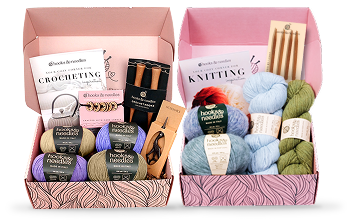
If you want to try out new techniques and yarns regularly, your Hooks & Needles subscription box introduces fresh projects that build skills like knitting in the round while providing curated yarn and tools.
Common Mistakes When Knitting in the Round and How to Fix Them
Even experienced knitters sometimes struggle with common pitfalls of circular knitting. Twisted joins will cause your project to spiral, and dropping stitches can unravel hours of work. Uneven tension between needles creates ladders, especially when using DPNs. The good news is these issues have straightforward fixes.
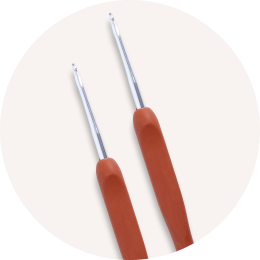
Always lay your cast-on stitches flat before joining to check for twists. If you see a twist after a few rounds, it’s best to unravel and start again rather than fight the twist—it won’t straighten out. When ladders appear, try tightening the first stitch on each needle or using a crochet hook to pull up loose stitches. Dropped stitches can often be picked up with a crochet hook or stitch lifter.
Practice slowly, and don’t hesitate to rewind a few rows if something looks off. Knitting in the round is a skill where patience pays off quickly.
Pro Tip: Use Stitch Markers to Track Your Rounds and Pattern
Placing a stitch marker at the beginning of your round helps you keep track of your progress and pattern repeats. This small tool saves you from counting stitches constantly and helps you spot where one round ends and another begins. It’s invaluable when working with complex patterns or colorwork.
Markers come in many styles—ring, locking, or split rings—and can be reused on countless projects. Use bright or contrasting colors so they’re easy to spot, and don’t be afraid to add extra markers to divide your stitches into pattern sections.
Closing Thoughts
Knitting in the round is a rewarding leap forward that opens up new project possibilities and delivers seamless, professional-looking results. While it can feel tricky at first, understanding your tools—circular needles, DPNs, and magic loop—and managing tension will smooth the way. Remember that common mistakes like twisted joins and ladders are part of the learning curve and easy to fix with a little patience.
Building confidence in knitting in the round expands your skillset and makes many exciting patterns accessible. Your Hooks & Needles skill path places this technique at a pivotal point, so you can feel proud every time you pick up your needles. Keep practicing, and soon knitting tubes will feel as natural as knitting flat pieces.
If you want to explore new yarns, patterns, and tools delivered right to your door—along with expert guidance on techniques just like this—Hooks & Needles subscription boxes introduce new skills each month, including knitting in the round.
FAQ
What’s the easiest way to join stitches in the round without twisting?
Lay your cast-on stitches flat on a surface to check they are not twisted before joining. Align the cast-on edge so all stitches face the same way. Once confirmed, join carefully and knit the first few rounds slowly to ensure the join is smooth.
When should I use double-pointed needles instead of circular needles?
Use DPNs for small circumference projects, typically under 16 inches, like socks, mittens, or sleeves. Circular needles work best for larger tubes or when using the magic loop method for smaller diameters.
What is the magic loop technique?
Magic loop uses a long circular needle to knit small diameters by pulling a loop of cable out between stitches. It reduces the need for multiple needles and can be easier to manage than DPNs for some knitters.
How do I avoid ladders between needles when using DPNs?
Tighten the first stitch on each needle by pulling the yarn a little tighter when you start knitting on a new needle. Maintaining consistent tension and not leaving slack between needles helps close gaps and prevent ladders.
Can I use any yarn weight with circular needles?
You can use circular needles with most yarn weights, but needle size and cable length should match your yarn and project. Finer yarns require smaller needles, while bulky yarns need larger needles. Always check your pattern’s recommendations for best results.