Quick Summary
If you’ve ever picked up a tunisian crochet hook only to feel lost with the forward and return passes, you’re not alone. By the end of this post, you’ll understand exactly how to complete these fundamental steps with a clear, no-fuss swatch that builds your confidence stitch by stitch. This is perfect if you’re ready to move beyond basic crochet and try something new without getting overwhelmed.
Why Tunisian Crochet Feels Different—and How to Ease Into It
Tunisian crochet stands apart from traditional crochet because it uses a longer hook and involves two distinct steps in each row: the forward pass and the return pass. If you’re used to single crochet or double crochet, this back-and-forth motion can feel confusing at first and might make you hesitate to try it. The key is to focus on these two passes separately and understand how they work together to build your fabric.
Starting with a small swatch simplifies the process. Rather than diving into a big project, practicing the forward and return passes on a swatch allows you to get comfortable with holding the hook, managing tension, and recognizing the stitches on the hook. This approach reduces the overwhelm and builds your skills steadily.
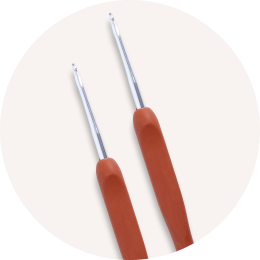
If you’re wondering which hook size to choose, starting with a medium-sized tunisian crochet hook (around 5.5 to 6 mm) helps you see your stitches clearly without them being too tight or loose. For tips on picking your first crochet hook, check out our detailed post on First crochet hook size.
Breaking Down the Forward Pass in Tunisian Crochet
The forward pass is the first half of every tunisian crochet row and it’s where you pick up loops on your hook across the row. Imagine it as a long chain of loops waiting to be worked off on the return pass. To start, you insert your hook into the next stitch, yarn over, and pull up a loop — but instead of completing a stitch, you leave that loop on the hook. You repeat this across the entire row, stacking loops one after another.
This process can feel slow compared to regular crochet, but it’s essential to keep an even tension. Holding the yarn too tight or too loose will affect the size of your loops and the overall look of your fabric. Practicing with a small swatch helps you find the right balance. If you’re new to holding yarn or want extra clarity on basic stitches, our Learn crochet from scratch series is a great resource to revisit fundamental techniques.
Understanding the Return Pass and Closing Your Row
Once you’ve collected all your loops on the hook during the forward pass, the return pass is where the magic happens: you work those loops off one by one to create your stitches. To do this, yarn over and pull through one loop to create a chain at the edge, then yarn over again and pull through two loops repeatedly until only one loop remains on your hook. This step can feel tricky, but it’s what forms the characteristic Tunisian crochet texture.
Many beginners struggle with keeping track of loops during the return pass or accidentally dropping loops off the hook. The best way to avoid this is to work slowly and keep your hand steady. Pausing between each stitch to check your loops can save frustration later. Once you’ve finished the return pass, you’re ready to start the next forward pass, repeating the stitch pattern row by row.
Common mistakes + fixes
- Dropping loops off the hook: This usually happens when you lose focus during the return pass. Fix it by slowing down and holding the loops gently but firmly on the hook.
- Uneven tension: If your swatch looks wobbly or uneven, practice holding your yarn the same way throughout the forward pass to keep loops consistent.
- Confusing stitch placement: When inserting your hook for the forward pass, be sure to work into the vertical bar of the previous row, not the top loops as in regular crochet.
Pro tip
Use stitch markers or safety pins at the start and end of your swatch rows to keep track of your edges. This helps prevent accidentally adding or skipping stitches and keeps your fabric straight.
How the Afghan Stitch Fits Into Tunisian Crochet
The afghan stitch is one of the most popular tunisian crochet stitches and a great next step after mastering the basic forward and return passes. It’s essentially the foundation stitch in tunisian crochet and creates a dense, warm fabric perfect for blankets and scarves. Once you feel confident with the forward and return passes, practicing the afghan stitch will give you a sense of accomplishment and a practical project to show for your effort.
Because tunisian crochet fabric is thicker than regular crochet, it’s important to choose the right yarn weight and hook size to avoid stiffness. Medium worsted weight yarn paired with a 6 mm tunisian hook usually works well for afghan stitch projects. Taking time to swatch with different yarns can help you find what feels best for your hands and your project.
Ready to make your next project this good?
Mrs. Quilty delivers a complete quilting project to your door every month — pre-coordinated fabric, tools, pattern, and video guidance included. Over 65,000 quilters have started their journey here. Box 1 is designed for exactly where you are right now.
Use LEARN20 for 20% off your first box

Tips for Practicing Tunisian Crochet Basics with Confidence
Once you grasp the forward and return passes, consistency is your best friend. Set aside short, focused practice sessions where you make small swatches to build muscle memory. Don’t worry about mistakes—they’re part of learning. Over time, you’ll notice your tension evens out and your speed increases.
Keep your hook and yarn handy and try different yarn weights and hook sizes to see what feels best. Tunisian crochet hooks come in a range of lengths; beginners often prefer medium-length hooks because they’re easier to handle. As you practice, you can explore different techniques like the afghan stitch to expand your skills and project options.
Closing Thoughts
Grasping the basic forward and return passes is the key to unlocking tunisian crochet. Starting with a simple swatch removes the pressure of a big project and lets you focus on the unique rhythm of this craft. Remember, uneven tension and dropped loops are normal early on — with steady practice, these will smooth out.
Confidence grows with every row you complete, and soon you’ll be ready to try the afghan stitch and beyond. Tunisian crochet offers a satisfying blend of crochet and knitting qualities, perfect for anyone looking to broaden their yarn crafting skills. If you want to explore more patterns and tools, Hooks & Needles is here as your trusted guide for every step of your crochet journey.
FAQ
What size tunisian crochet hook should I start with?
A medium size hook around 5.5 to 6 mm is ideal for beginners. It’s large enough to see your stitches clearly but not so big that your fabric becomes loose and floppy.
How do I keep tension even during the forward pass?
Hold your yarn consistently and avoid pulling too tightly when drawing loops onto the hook. Practice slowly and adjust your grip until the loops feel uniform across the row.
What is the difference between the forward pass and the return pass?
The forward pass involves picking up loops on the hook across the row, while the return pass works those loops off the hook to complete the stitches and finish the row.
Can I use regular crochet yarn and hooks for tunisian crochet?
You can use regular yarn, but tunisian crochet hooks are longer to hold the extra loops. Using a hook specifically designed for tunisian crochet makes it easier to manage your stitches.
What is the afghan stitch in tunisian crochet?
The afghan stitch is the basic tunisian crochet stitch formed by the forward and return passes. It creates a thick, textured fabric often used for blankets and warm accessories.