Quick Summary
Your yarn keeps catching, your hand aches sooner than it used to, and your gauge has quietly drifted half a stitch — and you assume all three are your fault. Often they are the tool. By the end of this you will be able to test a hook or needle in about twenty minutes and say, with reasons, whether it stays in the case or goes in the bin.
You do a small thing on every stitch and you have probably never noticed it. Mid-pull, you tilt the hook a few degrees so the head faces down, or you nudge a stitch forward with your thumb before you work it. That tilt and that nudge are not technique. They are corrections — your hands compensating for a tool that is catching, gripping or dragging where it should be sliding.
Once you see the correction, the upgrade question answers itself. A tool in good condition lets you move in a straight line: loop on, loop through, next. A worn one makes you add a movement, and a movement repeated three hundred times a row is where the ache, the uneven fabric and the abandoned project all come from.
What Your Hook or Needle Is Actually Doing in Each Stitch
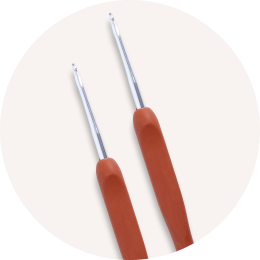
A crochet hook does four jobs in sequence, and each one belongs to a different part of the tool. The head enters the stitch, the lip catches the yarn, the throat holds the loop while it is drawn, and the shaft sets the loop's size. The shaft is the part that decides your gauge — the number of stitches and rows you get across a measured square of fabric.
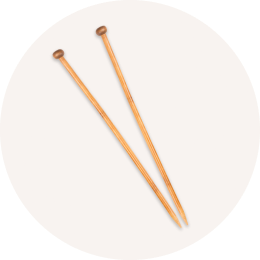
Knitting needles split the work differently. The taper — the sloped section behind the tip — does the entering and the loading, while the shaft carries the live stitches and controls how easily they slide toward the tip.
That division matters because damage is local. A hook can have a perfect shaft and a lip that snags every third stitch. A needle can be flawless along its length and blunt at the point where it needs to be sharpest.
Why this changes how you inspect a tool
Stop asking whether the tool is old and start asking which of those jobs it is still doing cleanly. A ten-year-old aluminium hook with a smooth throat is fine. A six-month-old one with a burr on the lip is not, and no amount of adjusting your grip will fix it.
Wear Happens to the Surface Before It Happens to the Shape
Metal hooks and needles rarely bend or thin out in normal use. What fails is the finish. Anodised or painted coatings wear through at the two or three contact points where your fingers rest and where the yarn drags, and the exposed metal underneath is microscopically rougher than the coating was.
Bamboo and wood fail differently. They go slightly furry as the grain lifts, usually near the tip, and then they splinter. A splintered bamboo tip will shred plied yarn and you will blame the yarn.
Plastic hooks develop the least obvious problem of all: a faint seam ridge where the mould halves met, which becomes noticeable only once the polish has rubbed off around it.
- Run a tissue along the whole length. Cheap facial tissue snags on anything a fibre would snag on. If it catches, mark the spot with a fingernail and look at it in daylight — that is your problem area, not the whole tool.
- Drag a fingernail across the lip or tip. You are feeling for a click or a catch. Smooth tools give you a continuous slide with no interruption.
- Slide a loop of your usual yarn along the shaft. It should move with steady resistance. A sudden grab halfway along means the finish has worn unevenly, which is worse than being worn all over.
- Work ten stitches and watch your hands, not the fabric. Any tilt, push or re-seat you perform more than once is the tool asking for help.
- Decide per tool, not per set. Sets wear at wildly different rates because you use three sizes constantly and the rest almost never.
The mistake here is sanding. People take fine sandpaper to a rough aluminium hook and remove what is left of the coating, which makes the drag worse within a fortnight. Sanding is a legitimate repair for untreated bamboo and nothing else.
When to Upgrade Crochet Hooks Knitting Needles: The Comfort Signals
Hand fatigue arrives before visible wear, which is why comfort is the earliest honest signal you get. A thin, straight metal hook forces your fingers into a pinch grip, and a pinch grip loads the small muscles at the base of your thumb rather than the larger ones in your forearm.
Ergonomic crochet hooks change the geometry rather than the hook. The wider handle lets you hold with a relaxed hand instead of a clamp, so the same session costs you less. That is the whole mechanism — there is nothing magic in the shape.
A hook that snags is not testing your patience; it is adding a correction to every stitch, and a 200-stitch row means 200 of them.
The signals worth acting on
- You shake your hand out during a session and did not used to.
- You have started resting the hook against your palm to relieve your fingers.
- Your stitch tension — how tightly you hold working yarn — tightens noticeably in the second half of a row.
- You avoid a project because of the tool it needs, not the pattern.
Those are grip problems, not damage problems, and they are the ones people ignore longest. If your sessions have been getting shorter, the piece on how long you can crochet before your hand gives out covers the pacing side of the same issue.
Want the yarn, the pattern and the guidance in one box?
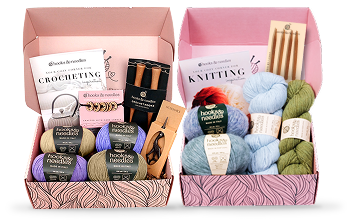
Each Hooks & Needles box arrives with the yarn, the tools and an exclusive pattern already matched to each other, plus instructions that do not skip the step you are stuck on. Nothing to source, nothing to substitute.
Use LEARN20 for 20% off your first box

Gauge Drift Is Often the Tool, Not Your Tension
Sizing tolerance is the part nobody mentions. A hook stamped 4.0 mm can measure anywhere from about 3.9 to 4.1 mm depending on where it was made, and a stamped letter size without a millimetre figure tells you even less. Two hooks from two brands, both labelled the same, will not always give you the same fabric.
Worn finish adds a second variable. When the shaft grabs, you unconsciously pull each loop a little tighter to keep it moving, and your gauge tightens with it — usually by a fraction of a stitch per inch, which is exactly enough to make a sweater a size too small.
So when your swatch matches the pattern but the garment does not, check the tool before you rewrite your technique. Measure the shaft with a needle gauge, and swatch the same yarn on two hooks of the nominally same size.
The common error is swatching with the good hook and then knitting the body with the tired one from the same set because it is the one you reach for. Swatch with the exact tool you will use for the project, every time.
Match the Surface to the Yarn You Are Using Now
Friction is a pairing, not a property. Slippery yarn on a slick metal needle drops stitches; grabby wool on bamboo drags and slows you down. A tool that felt perfect two years ago may simply be mismatched to the fibres you have moved on to.
| What matters | Bamboo or wood | Aluminium or steel |
|---|---|---|
| Slippery yarn (silk, bamboo blends, superwash) | Holds stitches securely; fewer drops | Stitches slide off the tip easily |
| Grabby yarn (rustic wool, mohair, cotton) | Drags and tires your hands faster | Moves freely; noticeably quicker |
| How wear shows up | Grain lifts, tip splinters | Coating rubs through at contact points |
| Warmth in the hand | Warms up, kinder on stiff joints | Stays cold, harder on aching hands |
Most people end up owning both rather than choosing, which is the sensible outcome. A set of  36 Pcs Bamboo Knitting Needles covers the slippery-yarn half of that problem across a full range of sizes, so you are not buying one size at a time as each project demands it.
If you are weighing the two materials properly rather than by feel, the breakdown of the key differences between bamboo and metal needles and hooks goes further into how each behaves under load.
What Happens If You Keep Working With the Wrong Tool
Nothing dramatic happens on day one, and that is the trap. The damage is cumulative and it shows up in three places, none of which look like a tool problem at the time.
Your fabric goes first. Uneven tension across a piece often traces back to a shaft that grabs in one spot, because you are gripping harder in the affected half of every row without noticing.
Your yarn goes second. A burr on a hook lip splits plies, and split plies mean fuzzy stitches that no amount of blocking — wetting and pinning the finished piece to shape — will tidy up.
Your confidence goes last, and it is the expensive one. You conclude that you cannot hold even tension, or that lace is beyond you, or that you are simply slow. Almost none of that is true of you and most of it is true of the tool.
What To Do Next
Lay the whole kit out tonight and run the tissue test on every piece. It takes twenty minutes and it will usually flag two or three tools, not the whole collection — which makes the fix far cheaper than you expected.
Replace by frequency, not by set. Buy the best version you can of the two or three sizes you actually use weekly, and leave the rarely-touched sizes as they are until a project needs them.
Then swatch again with the new tool before you cast on anything sized. Your gauge will likely have shifted, and that is the point.
Building up gradually beats a single big purchase, and the approach in building your crochet toolkit essentials over time is the one to follow if you are replacing several things. If someone asks what you want for a birthday, a  Hooks & Needles Gift Card lets you choose the sizes yourself rather than receiving a set with four sizes you will never touch.
FAQ
Can I keep using a hook with a chipped coating if it still works?
You can, on smooth plied yarn, for a while. The chip becomes a real problem with mohair, single-ply and anything loosely spun, because those fibres catch on the rough edge and split. If the chip is on the lip or throat, replace it now; if it is only on the grip area, it is cosmetic.
Do I really need ergonomic crochet hooks, or is that just marketing?
You need them if you are pinching. The handle does one measurable thing — it widens the grip so you hold with a relaxed hand instead of clamping. If you crochet for twenty minutes at a time with no ache, a standard hook is genuinely fine and you are not missing anything.
Can I sand a rough bamboo needle instead of buying a new one?
Yes, and it usually works. Use very fine sandpaper along the grain, then rub the tip with a little beeswax or even a paper bag to burnish it. Do not do this to metal or coated tools — you will strip the finish and make the drag permanent.
Do I have to replace a whole set at once?
No, and you probably should not. Sets wear unevenly because two or three sizes do most of the work. Replace those individually, keep the rest, and accept that your kit will be a mix of brands. Mixed brands only matter within a single project, where you should stick to one tool.
My gauge matches the pattern, so can I skip all this?
Check whether it still matches at the end of a long row. Gauge that is correct when you are fresh and tightens as your hand fatigues is a comfort problem showing up as a measurement problem. If it holds steady throughout, your tools are doing their job and you can leave them alone.