You have three tabs open, each one promising hand-dyed yarn and a project you will love, and you are stuck on the same worry: what if the pattern arrives and you cannot read it. That is the fear worth taking seriously. Yarn quality across the main monthly knitting subscription services is broadly fine — the thing that decides whether you finish is whether the pattern's difficulty matches the skills you actually have this month, and whether the yarn weight is one you have ever held before.
So instead of ranking boxes on how pretty the photography is, this walks through the sign-up in the order it really happens: what you decide before you subscribe, what to check about yarn weight, how to read the difficulty curve across several months, and the mistakes that show up again and again in cancellation reviews. By the end you will know which box to join and what to check on the product page before you hand over a card.
Stage One: Decide What You Want Off Your Needles First
Name the object you want to exist in six weeks before you look at a single box. A cowl, a pair of mitts, a baby blanket, a jumper. This sounds like a soft question and it is actually the hardest one, because most people answer "something nice" and then subscribe to whichever box has the best photos.
The object decides everything downstream. A cowl needs 100–200 metres and forgives loose tension. A jumper needs consistent gauge across hundreds of stitches, which is the skill most subscribers are still building.
Gauge, if it is a word you have skimmed past before, means the number of stitches and rows a knitter gets over 10cm in a given yarn on given needles. Every box that promises a garment is quietly promising you will match theirs.
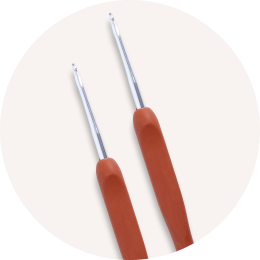
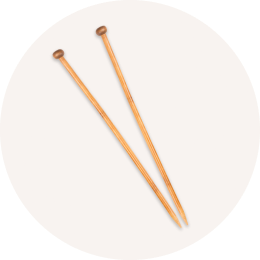
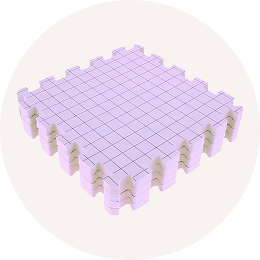
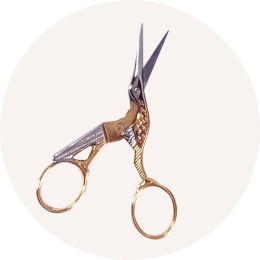
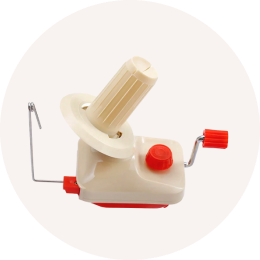
Be honest about hours too. Two evenings a week gets you accessories comfortably; it does not get you a cardigan before the season it was designed for has passed. If you are still assembling basic tools, something like the  35-Piece Knitting Kit: Perfect for Beginners is worth having before your first box lands, so a missing stitch marker never stalls a row.
Stage Two: Read the Yarn Weight Variety, Not the Yarn Photos
Yarn weight is the single most useful axis in any knitting box comparison, and almost no comparison chart shows it. Weight categories run from lace and 4-ply through DK, worsted, aran, chunky and super chunky. Each one changes how visible your mistakes are and how fast a project moves.
A box that sends worsted or aran for your first three months is doing you a favour. Stitches are large, the fabric grows quickly, and dropped stitches are easy to see and pick back up. A box that opens with laceweight is testing you.
What you want by month four is variety with a reason behind it — a chunky project, then a DK one, then something in 4-ply once your tension has settled. Variety for its own sake just means you never build tension memory in any single weight.
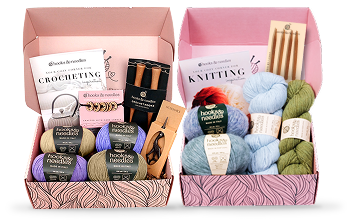
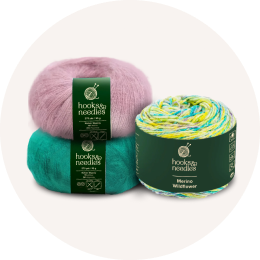
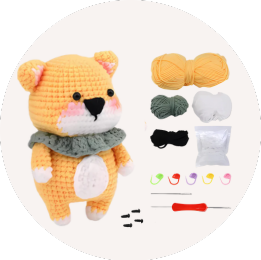
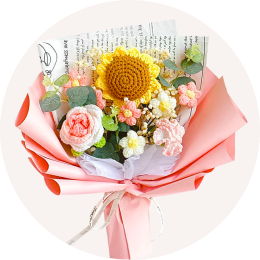
Here is what one month's delivery actually looks like when it arrives, packaging and all.
I am so excited for my monthly crochet box! Packaging is so amazing 😲
Check these on the product page before you subscribe, because most of them are stated somewhere and simply not summarised:
Stage Three: The Difficulty Curve Is Where the Best Knitting Subscription Box Earns It
One box is easy to judge. A curve needs three or four, which is why past-month archives matter more than the current reveal. What you are looking for is a sequence where each project adds one new skill and repeats two you already have.
The good pattern looks like this: garter scarf, then ribbing, then increases and decreases in the round, then short rows. The bad pattern jumps from a straight-knit dishcloth to a colourwork yoke and calls both of them suitable for newer knitters.
Difficulty labels are also not standardised between companies, so treat them as marketing and read the actual instructions instead. If a sample page uses "work as established" without ever establishing anything, you have your answer.
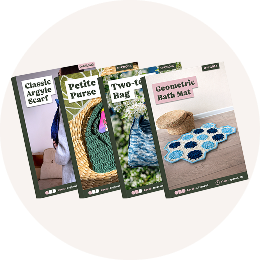
Between deliveries, extra patterns in weights you already own are the cheapest way to practise a skill twice before it counts — a set like  10 Knitting Patterns (Sent Via Email) gives you somewhere to repeat short rows before a garment depends on them. If you want the curve compared across services rather than described, the breakdown of three key differences between Hooks & Needles, Annie's Kit Clubs and KnitCrate is the closest thing to a side-by-side.
Stage Four: Mistakes That Turn Into Cancellations
Public reviews of monthly craft boxes complain about remarkably few things, and almost all of them are avoidable at sign-up. Here are the four that recur, with what to do instead.
Assuming the box ships the day you order
Subscriptions run on a monthly cycle, so a mid-month sign-up often means waiting for the next batch. Fix: find the stated cut-off date before you subscribe and diarise it, then treat the first delivery as a date rather than a countdown from your order. Reviews about which knitting subscriptions ship reliably every month are usually describing this mismatch rather than a genuine delay.
Cancelling too late in the billing cycle
The commonest one-star review is a charge that landed after someone decided to stop. Fix: cancel against the billing date, not the shipping date, and screenshot the confirmation. If a service will not tell you which date governs, that is useful information about the service.
Skipping the gauge swatch because the yarn is included
Included yarn feels like a guarantee of fit. It is not — your tension is still yours. Fix: knit a 10cm square in the supplied yarn, measure it, and change needle size before you cast on the real thing.
Choosing on quantity of yarn
More skeins per box reads as better value and often means leftover yarn in weights you never chose. Fix: score boxes on whether each month's yarn is exactly enough for a finished object, then compare on that.
One habit saves more projects than any of the above: photograph your work at the end of each session, laid flat in daylight. When something looks wrong three rows later, you can see precisely where the fabric changed instead of guessing.
Ready to start a project you will actually finish?
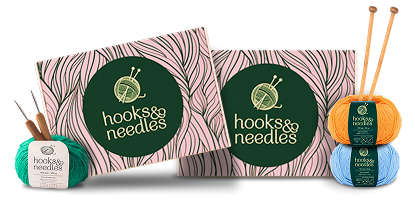
Hooks & Needles delivers a complete yarn project to your door every month — coordinated yarn, the right hooks or needles, and a pattern written to be followed rather than decoded. Pause or cancel whenever you like.
Use LEARN20 for 20% off your first box

Where To Go From Here
Score your shortlist on three columns and nothing else: yarn weight named per month, one new skill per project, and a cancellation date you can find without emailing anyone. A box that scores well on all three will keep you knitting. A box with better photography and none of the three will not.
Then commit to one month rather than a year. A single delivery tells you whether the pattern speaks your language, and that is the only test that matters.
If you want to see how several of the top knitting boxes weigh up against each other before you decide, the round-up of knitting and crochet subscription boxes newer crafters get on with covers the shortlist stage in more detail.
FAQ
What is the best knitting subscription box to join?
The best one is whichever names its yarn weight each month, adds a single new technique per project, and lets you cancel on a date you can find yourself. For most newer knitters that means a box built around DK to aran weight with a written pattern rather than a chart-only sheet.
My swatch is bigger than the pattern's gauge. Do I keep going?
No — go down a needle size and swatch again. Too many stitches per 10cm means your tension is tight and you go up a size instead. It costs you twenty minutes and saves a garment that comes out two sizes wrong.
Can I substitute the yarn that came in the box?
Yes, if you stay in the same weight category and swatch the substitute first. Swapping aran for DK will change the finished measurements even at the same stitch count, because the fabric itself is thinner.
I ran out of yarn three rows from the end. What now?
Undo the last few rows and bind off early rather than joining a mismatched dye lot for a visible stripe. If the project is a scarf or cowl, a slightly shorter finished length reads as intentional and nobody will measure it.
Does a knitting box work if I mostly crochet?
Only if it says so. Some services run separate knitting and crochet streams, others send one pattern that suits a single craft, so check which stream you are subscribing to. Gauge, blocking and yarn weight logic carry across both crafts, but stitch instructions do not.