The story you have probably absorbed goes something like this: socks are where knitting gets serious, and the heel turn is the wall you either climb or you don't. People say it in the same tone they use for steeking. So you knit hats, you knit a shawl, you tell yourself you will get to socks eventually, and eventually keeps moving.
Here is what is actually true. The heel turn is roughly sixteen short rows worked over half your stitches, governed by a single instruction you repeat until you run out of stitches — no new skill, no chart, no shaping you have not already done in a hat crown. The genuinely demanding parts of a first sock are elsewhere: fine yarn, small needles, and a gauge that has to be tighter than feels natural. By the end of this you will know how the heel is built, what the one repeating rule is, and where the real difficulty sits.
The Sock Knitting Basics Beginners Get Wrong About the Heel
A cuff-down sock has six parts, and only one of them has a reputation. You work the cuff in ribbing, the leg in the round, then stop working in the round and knit a heel flap back and forth on half your stitches. The heel turn shapes that flap into a cup. Then you pick up stitches along the flap edges, decrease that gusset away, knit the foot, and close the toe.
The heel flap is stocking stitch with a slipped stitch on every right-side row — slip one, knit one, all the way across, then slip one and purl back. Those slipped stitches double the fabric thickness where your heel rubs, and they create a neat chain along each edge that you will later pick up stitches from. That is the whole flap. Thirty-odd rows of it.
The turn itself is short rows: you knit part of the row, stop, turn around, and come back, leaving stitches parked at each end. Each time you turn, a small gap appears where you stopped. After the first two set-up rows, every single row that follows obeys one rule.
Work to the gap, work the two stitches either side of the gap together, work one more stitch, turn.
That is the heel turn. You repeat that rule until there are no parked stitches left, and the flap has folded itself into a heel cup. Most patterns write it as a stitch count on every row, which is why heel turn knitting instructions look intimidating on the page — twelve rows of numbers where one sentence would do. Read your pattern once, find the rule underneath the numbers, then work from the rule.
Would a short-row heel be easier for a first sock?
It has fewer steps, but not simpler ones — a short-row heel means wrapping stitches or working German short rows, and it gives you no flap fabric where wear happens most. A heel flap and gusset takes longer to describe and fits a wider range of ankles. For a first pair, more steps that are each obvious beats fewer steps you have to fudge.
What goes wrong here
Almost every first-heel problem traces back to one of three things. You lose track of the gap and turn a stitch early or late, which leaves the two wings of the heel uneven. You forget the single stitch after the decrease, so the gap never closes. Or you slip the first stitch of a row knitwise instead of purlwise and the edge chain twists, which makes picking up gusset stitches a guessing game.
The other classic is a loose, gappy stitch at each turn. When you turn your work and knit that first stitch, give the yarn a firm tug before you knit the second — that alone closes most of the visible holes. If you want insurance, drop a removable marker into each gap as it forms; you will stop hunting for it and the row becomes mechanical.
Small Needles and Sock Yarn Are the Real Learning Curve
Sock yarn is 4-ply weight, sometimes labelled fingering or super fine, and it is thin — thinner than most people expect until it is in their hands. You will typically work it on 2.25mm or 2.5mm needles at around 30 to 36 stitches per 10cm. That is a lot of stitches for a small object, and the first leg feels slow because it genuinely is slow.
Gauge here is not cosmetic. Socks are worked with negative ease, meaning the sock is deliberately about 10% smaller around than your foot so it grips instead of sagging. Measure the circumference of your foot at the ball, subtract that 10%, and knit to the gauge your pattern states rather than the gauge that feels comfortable.
Fibre matters as much as gauge. Most sock yarn is wool blended with 20–25% nylon for abrasion resistance, and that nylon is why the pair survives being walked on. Pure merino sock yarn feels wonderful and wears faster, which is a fair trade for bed socks and a poor one for everyday pairs — worth knowing if you already understand what makes merino a favourite fibre for knitting and crochet and were planning to reach for it.
What goes wrong here
Swatching flat and then knitting in the round is the mistake that costs whole socks. Most knitters purl at a different tension than they knit, so a flat swatch tells you very little about the fabric you will actually produce in the round. Swatch in the round, on the needles you will use, in the yarn you will use.
The second one is quieter: measuring the swatch straight off the needles. Wash and dry it first, because superwash sock yarn in particular relaxes and grows, and a sock that fits on the needles can slide off your heel after its first wash.
You Do Not Need Four Double-Pointed Needles
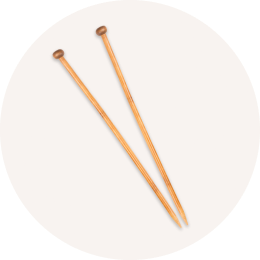
Double-pointed needles are traditional, not compulsory. A sock is simply a tube of about 56 to 72 stitches, and any setup that can hold a small circumference in the round will knit it. DPNs, a 23cm fixed circular, magic loop on one long cable, or two shorter circulars all produce identical fabric.
Magic loop is the setup I would put in front of a first-time sock knitter. One 80cm or 100cm circular needle, stitches split across two halves of the cable, no fifth needle rolling under the sofa — and the same needle handles both socks of the pair. If you have not bought circulars yet, it helps to know which circular needles are worth buying first before you own five of the wrong length.
If working a small tube in the round is new to you, a hat is a low-stakes rehearsal — something like the  Firecracker Pom Hat Knitting Pattern gets you joining, working in the round and decreasing on chunkier yarn where every stitch is visible.
Whatever you choose, expect ladders — loose columns of stitches where one needle ends and the next begins. Knit the first two stitches after each transition a little more firmly and they disappear.
Toe-Up Versus Cuff-Down Will Not Decide This
Knitters argue about direction as though it were the deciding variable. It is not. Toe-up lets you try the sock on as you go and use every last metre of yarn; cuff-down gives you the classic heel flap and gusset and a simpler cast-on. Both are perfectly reasonable for a first pair, and neither one rescues a sock knitted at the wrong gauge.
What does matter is how your first sock knitting pattern is written. You want stitch counts stated at the end of every section, the heel turn spelled out row by row rather than compressed into "repeat as established", and a clear instruction for where to pick up gusset stitches. A pattern that assumes you already know those things is what makes socks feel hard.
If pattern language is the part that trips you rather than the knitting, working through how to read a knitting pattern without drowning in abbreviations first will make the sock instructions read as steps instead of code.
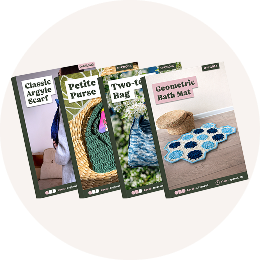
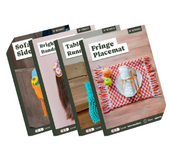
It also helps to have a few clearly written smaller patterns in your library so socks are not the only thing you are learning from at once — a set like  10 Knitting Patterns (Sent Via Email) gives you shorter projects to build tension consistency on. Note that these are patterns only — yarn and needles are not included.
One more thing about the second sock. It is not harder; it is just less novel, and that is a different problem entirely. Cast it on the same day you finish the first.
Ready to start a project you will actually finish?
Hooks & Needles delivers a complete yarn project to your door every month — coordinated yarn, the right hooks or needles, and a pattern written to be followed rather than decoded. Pause or cancel whenever you like.
Use LEARN20 for 20% off your first box

Where To Go From Here
Start with one plain cuff-down sock in a solid or lightly variegated sock yarn, on a 2.5mm circular, at the gauge your pattern asks for. Solid yarn matters more than you would think — when something goes sideways in the heel, you need to be able to see your stitches.
Work the flap, then set the pattern aside and work the turn from the rule: to the gap, two together across it, one more, turn. Do it once and the mystique evaporates permanently.
What to remember
- The heel turn is short rows driven by one repeating rule, not a technique you need to learn separately.
- Slip the first stitch of every heel flap row purlwise — it thickens the fabric and gives you a clean edge to pick up gusset stitches from.
- Tug the yarn firmly on the first stitch after each turn to close the gaps before they become holes.
- Socks need negative ease: knit about 10% smaller than your foot circumference, at the pattern's gauge, not your comfortable gauge.
- Swatch in the round and wash the swatch before you measure it.
- Magic loop on one 80cm circular is the simplest setup, and it knits both socks of the pair.
FAQ
If the heel turn is that simple, why does everyone call socks advanced?
Because socks combine several ordinary skills at once — working in the round on a small circumference, short rows, picking up stitches, and shaping a toe — all at a fine gauge where each row takes a while. None of those steps is advanced on its own. The difficulty is accumulation and patience, not the heel.
Can I learn on worsted weight yarn and bigger needles instead?
You can, and it is a genuinely useful rehearsal for the construction, so long as you know what it does not teach you. Thick socks do not fit inside normal shoes, they wear unevenly, and they will not calibrate your tension for fingering weight. Treat a chunky pair as a practice run for the shaping, then knit the real pair in sock yarn.
My finished heel has holes at the corners where the gusset starts. Did I turn it wrong?
Almost certainly not — that spot is where the picked-up gusset stitches meet the held instep stitches, and small gaps there are normal, not a failed heel turn. Pick up one extra stitch in the corner and decrease it away on the next round, or pick up through the loop below the gap. Blocking closes what remains.