Short answer
- Most first projects stall because the pattern skipped a step, not because the maker lacks a knack for it.
- Smooth, pale, worsted-weight yarn shows you your own stitches — dark fuzzy yarn hides every mistake until it is too late to fix.
- A 15cm gauge swatch, worked before the project, is the difference between a scarf and a long triangle.
- A guided kit removes the three decisions — yarn, hook or needle size, pattern — that sink most first attempts.
It is in a carrier bag beside the armchair. Maybe fifteen centimetres of fabric, wider at the top than the bottom, with a hard ridge where you put it down for a fortnight and picked it back up with different tension. There is a hole about a third of the way up that you cannot account for. The yarn tail is still attached to a ball that has gone slightly furry from being pulled out and pushed back in.
You have not touched it since March. The conclusion most people draw at this point is that they are not a natural, that their hands are too stiff now, or that this was always going to be one of those hobbies other people are good at. That conclusion is almost always wrong, and the real causes are boringly fixable. Here they are, in order of how often they turn out to be the culprit.
The Pattern Assumed Things Nobody Taught You
Free patterns are written by people who have been doing this for fifteen years and have forgotten what they know. A line like "ch 3, turn, dc in each st across" contains four separate assumptions: that you know which loop to work into, that the chain-3 counts as a stitch, that "turn" means flip the work rather than rotate it, and that you can tell a stitch from a gap.
Miss any one of those and the fabric goes wrong within three rows. The hole you cannot account for is usually a stitch worked into a chain space instead of a stitch. The widening is usually an extra stitch made at the turn, repeated every row.
None of that is a hand problem. It is a documentation problem.
Is it my age, though? My hands are not what they were.
Stiffness affects how long you can work in one sitting, not whether the stitches come out correctly. Grip strength and joint comfort are managed with hook size, session length and a cushioned handle. Accuracy is a separate issue entirely, and it is taught, not inherited.
How to confirm it: count the stitches in your first row and in your last row. If the numbers differ and you never intended an increase, the pattern did not tell you what to do at the edge. That is cause number one, and it accounts for more abandoned bags than everything below combined.
The Yarn Was Fighting You Before You Started
Someone gave you a bag of yarn, or you picked the pretty one. It happens to almost everybody taking up a new hobby after retirement — yarn is bought for colour, and colour is the one property that does not affect whether you succeed.
Three yarn traits make a first project harder than it needs to be:
- Dark or heathered colours. You cannot see stitch definition, so you cannot count, so you cannot find the mistake.
- Fuzzy fibres like mohair or brushed acrylic. They grab, they hide the loops, and they are close to impossible to unravel cleanly.
- Loosely plied or splitty yarn. Your hook goes through the strand rather than around it, which produces those small ragged bumps.
What you want first is a smooth, plied, light-coloured acrylic or wool blend in worsted weight — that is category 4 on the yarn weight scale, the medium one most starter patterns are written for. It is thick enough to see and thin enough not to strain your hands.
How to confirm it: hold the abandoned piece at arm's length in good light. If you cannot pick out individual stitches from a metre away, the yarn was never going to teach you anything, and no amount of practice with it would have.
Nobody Mentioned Gauge, So the Piece Kept Changing Width
Gauge is how many stitches and rows you get across a set measurement — usually 10cm — with a particular yarn and hook or needle. Tension is the looseness or tightness of your hands that produces that gauge. Beginners are told to check gauge and almost none of them do, because it feels like homework standing between you and the project.
Then the scarf comes out 40cm wide instead of 20cm, or the fabric goes from soft to boardy halfway up because you relaxed as you got confident. Both are gauge drifting, and both are visible in that bag right now.
- Work a square bigger than you think. Aim for at least 15cm across so you can measure the middle, away from the edges where tension always differs.
- Let it rest. Put it down for ten minutes before measuring. Fabric under your hands is stretched fabric.
- Measure across the centre. Count stitches over 10cm and compare with the pattern's number.
- Change the tool, not your hands. Too many stitches means go up a hook or needle size; too few means go down. Never try to knit tighter on purpose — it will not hold.
How to confirm it: lay the piece flat and measure the width at the bottom, middle and top. More than a centimetre of variation means tension, not skill, ended the project.
Your Hands and Eyes Were Set Up to Struggle
Most people work in the chair they read in, under a lamp positioned for a book. A book is a flat page at a fixed distance. Crochet and knitting are a small, moving, three-dimensional thing held in your lap, and lap-level light is what makes the loops legible.
Poor light forces you to hunch, hunching tightens your shoulders, tight shoulders tighten your hands, and tight hands change your gauge. It is a chain, and it starts with the lamp.

From the Hooks & Needles shop
Crocheting/Knitting Neck Lamp
Because it sits on your shoulders, the light moves with the work rather than leaving your hands in their own shadow — which is exactly the problem an overhead lamp creates.
Session length is the other half of this. Thirty focused minutes produces better fabric than two hours that end with sore thumbs, and our notes on how long you can crochet before your hands start protesting go into where that limit usually sits and how to extend it.
How to confirm it: pick the piece back up tonight under a bright, close light. If the stitches suddenly look obvious and countable, visibility was doing more damage than technique ever did.
Common Mistakes When Starting Knitting or Crochet in Retirement
These come up again and again with new retirees, and each one has a fix that takes less than an afternoon.
Choosing a blanket as a first project
A blanket is one stitch repeated ten thousand times, which means one mistake repeated ten thousand times. The fix: pick something finished within four hours — a dishcloth, a headband, a small bag. Finishing teaches more than persisting.
Buying a 40-piece hook set before the first stitch
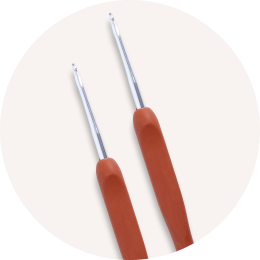
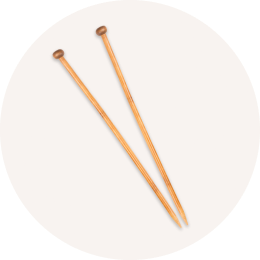
Mixed sets are usually thin aluminium with unmarked sizes, and the tips vary between them. The fix: one good hook or one pair of needles in the size your yarn's ball band recommends. Worn or poorly finished tools change every loop, as the way worn hooks and needles alter your stitches sets out in detail.
Letting the project live loose in a bag
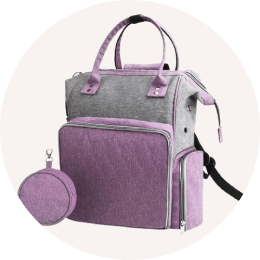
Yarn that gets crushed, tangled and re-wound arrives at your hands in a different state each time, and so does your tension. The fix: one container that holds the yarn, the tool and the pattern together, so picking up where you left off takes ten seconds rather than ten minutes.  Crochet & Knitting Organizer Tote
Learning from four sources at once
American and British crochet terms differ — a US single crochet is a UK double crochet — so two videos can teach you two different stitches under the same name. The fix: one teacher, one terminology, until the first project is off the hook.
Treating a mistake as a verdict
Frogging — pulling the work back — is not failure, it is editing. The fix: unravel to one row below the error and carry on. Experienced makers do this weekly.
Ready to start a project you will actually finish?
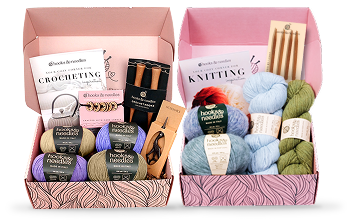
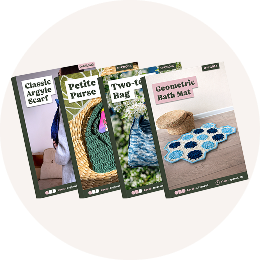
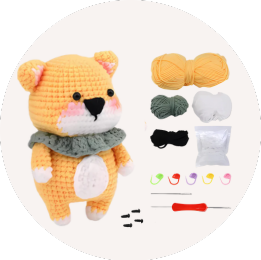
Hooks & Needles delivers a complete yarn project to your door every month — coordinated yarn, the right hooks or needles, and a pattern written to be followed rather than decoded. Pause or cancel whenever you like.
Use LEARN20 for 20% off your first box

Before You Start
The fix for all five causes above is the same one: remove the decisions. Every stall traced back to a choice made before the first stitch — which yarn, which hook, which pattern, which teacher — by someone who had no way of knowing what the right answer was yet.
That is the honest case for a guided box when you are taking up a craft later in life. The yarn is chosen to suit the pattern, the hook or needle is the size that pattern was written for, and the instructions are written for someone who has not spent a decade absorbing the shorthand. It does not teach you patience and it will not stop you dropping stitches. It does mean that when something goes wrong, the cause is in your hands and not in a mismatch you had no way to spot.
If you are still weighing up whether this is the right thing to take on at all, the case for knitting and crochet as a retirement hobby for absolute beginners covers the practical side — cost, time and how quickly the first results appear.
The clip below shows a double crochet worked slowly, in a single minute, with the hook going into the correct part of the stitch each time — the one detail that causes most of the holes described at the top of this page.
DOUBLE CROCHET FOR COMPLETE BEGINNERS
FAQ
Can I save the lopsided piece already sitting in the bag?
If the edges wander but the fabric is sound, keep working and make it a dishcloth or a cushion cover panel — wet blocking, which means dampening the piece and pinning it flat to dry, will straighten a surprising amount. If there are holes and dropped stitches through the middle, unravel it and re-use the yarn. Nothing is lost except the hours, and those were lessons.
I am 20cm into a scarf and it is widening. Do I start again?
Not necessarily. Count your current row, work back down to the original stitch count by decreasing one stitch per row at the same edge, then continue — worked gradually, the taper reads as a design. If the widening is severe, frog back to where the count was still correct rather than to the very beginning.
My first half was much tighter than the second half. Can that be evened out?
Blocking evens out moderate tension differences in wool and wool blends, because the fibres relax and reset as they dry. Acrylic barely responds to water at all, so a tension change in acrylic stays visible. In that case, finish the piece anyway and treat the join as your record of getting better.
Should I learn knitting or crochet first?
Crochet is generally quicker to recover from, because only one live loop is on the hook — put it down mid-row and nothing unravels. Knitting holds every stitch of a row on the needle, so an interruption carries more risk until you are confident. If your hands tire easily, crochet's single-tool grip is often the kinder starting point.