Quick Summary
You want to know whether a monthly yarn box gives you more than the same money spent at a craft shop. Here are three real boxes broken down by yardage, hook size, pattern length and what actually got finished, including the skein that arrived in a knot. If you have ever bought two skeins that turned out to be a whole weight category apart, this is written for you.
Two cowls are sitting on my blocking mat right now, worked from the same pattern, the same stitch count, the same 4.5 mm hook. One was made from the DK yarn that shipped with the pattern. The other was made from a supermarket acrylic I grabbed because I wanted to start that evening. The box version weighs 96 g, falls into soft folds when you pick it up by one edge, and the half double crochet rows sit as clean horizontal ridges. The substitute weighs 128 g, stands up on its own like a collar, and the ridges have blurred into a single fuzzy plane.
Nothing separates them except which yarn met the hook. That is the whole argument for a curated box, and it is also the reason a box can disappoint: if the pairing is careless, you have paid for someone else's shopping trip. So this is a count, not a mood board. Three boxes, opened and inventoried, with the parts that earned their place separated from the parts that were filler.
The Yarn: Weight, Fibre and Whether There Is Enough of It
Yarn weight is the thickness category, not what the ball weighs on a scale. The categories run from lace and fingering at the thin end through DK and worsted in the middle to chunky and super bulky. Get this wrong by one step and your finished piece changes size, drape and how much yarn you burn through.
Across the three boxes, the yarn arrived as full skeins with the ball band intact, which matters more than it sounds. The band carries the fibre content, the recommended hook and needle range, the yardage and the dye lot number, and you need all four if you ever want to buy more of the same.
The yardage is where a box either respects you or does not. Each of the three included enough to finish the pattern with a working margin, not a nail-biting one:
- Box one: 2 skeins of DK cotton blend, 230 m total, for a pattern that consumed roughly 190 m.
- Box two: 1 skein of worsted acrylic and wool, 180 m, for a hat that took about 145 m.
- Box three: 3 mini skeins of fingering weight, 75 m each, for a colour-block project using nearly all of it.
That leftover margin of 30 to 40 metres is deliberate. It covers one full frogged attempt at the brim or the first repeat, which is exactly what a learner needs and exactly what a single-skein shop purchase does not give you.
The Hook or Needle: Size, Finish and Whether It Stays in Rotation
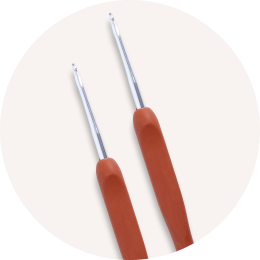
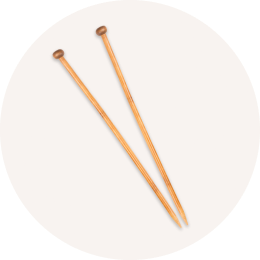
Every box in this sample included one tool sized to the pattern, not a random assortment. Box one carried a 4.5 mm aluminium hook with a soft grip handle. Box two carried 5.0 mm bamboo double-pointed needles. Box three carried a 3.5 mm hook. In each case the tool matched the size printed in the pattern, so there was no moment of hunting through a drawer.
The material changes how the stitches behave under your hands. Aluminium and steel let yarn slide, which suits tight tension and speeds you up. Bamboo grips slightly, which stops slippery stitches escaping and suits anyone whose stitches keep sliding off the tips. If you are still deciding what you prefer, the breakdown of how bamboo and metal hooks and needles differ in grip and speed is the faster route than buying both.
The honest limitation: one box gives you one size. You are building a set slowly rather than receiving one, and if you already own a full set you are receiving a duplicate. Once I want light on dark yarn late at night I reach for my  LED Crochet Hooks: 11-in-1 Rechargeable rather than the box hook, and that is a fair thing to say out loud.
The Pattern: Where the Instructions Stop Assuming
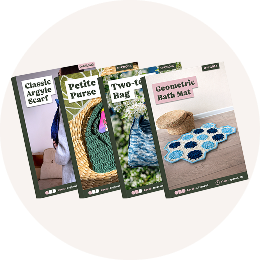
Patterns are the part a shopping trip cannot replace. The three included patterns ran 4, 6 and 5 pages, printed, with stitch counts at the end of every row and a written gauge target at the top.
Gauge is stated, not implied
Gauge is how many stitches and rows fit into a 10 cm square at a given tension. All three patterns gave both numbers and named the stitch used for the swatch. That last detail gets skipped constantly in free patterns, and without it a gauge figure is unusable.
Abbreviations are expanded on the page
Each pattern listed its abbreviations before the instructions, including the ones people assume you know: sl st for slip stitch, sc and dc for single and double crochet, and the reminder that UK and US crochet terms name the same stitches differently. That single note prevents the most common wrong-height fabric there is.
A curated box is not selling you yarn, it is selling you the removal of every decision that sits between you and casting on.
Whether that removal is worth paying for depends entirely on how much of your crafting time currently gets spent standing in an aisle comparing ball bands. If you are new enough that those comparisons still stall you, the assessment of how the box handles absolute beginners covers the learning curve more closely than a contents list can.
Want the yarn, the pattern and the guidance in one box?
Each Hooks & Needles box arrives with the yarn, the tools and an exclusive pattern already matched to each other, plus instructions that do not skip the step you are stuck on. Nothing to source, nothing to substitute.
Use LEARN20 for 20% off your first box

Hooks and Needles Review: Three Boxes, Counted Item by Item
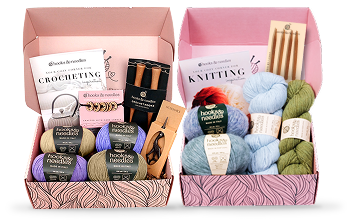
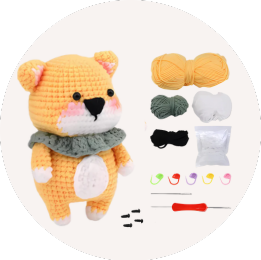
Counted flat, the three boxes held 4, 5 and 6 items respectively. Yarn, one tool, one printed pattern and one notion each time, with the larger boxes adding a stitch marker set and a tapestry needle for weaving in ends.
One skein in box three arrived tangled. Not lightly, either: a fingering weight mini skein that had lost its centre pull and needed 25 minutes of untangling before it would wind. That is a real cost and pretending otherwise would make this an advert. It happened once across three boxes, the yarn itself was undamaged, and the remaining metreage was intact.
| What matters | The box | Sourcing it yourself |
|---|---|---|
| Yarn quantity | Matched to the pattern with 30 to 40 m spare | Usually one skein too many or one too few |
| Tool sizing | Correct size arrives with the yarn | Bought separately, often duplicating what you own |
| Pattern | Written for that exact yarn, gauge stated | Free pattern written for a yarn you did not buy |
| Leftovers | Small, usable amounts | Partial skeins in odd dye lots |
| Time before casting on | Minutes | A shop trip plus substitution maths |
Divide the box cost by the item count and the per-item figure lands close to shelf prices for comparable yarn. The saving is not really in the yarn. It is in the two skeins you did not buy by mistake and the project you did not abandon at row 12 because the fabric came out wrong.
What Is Worth Paying More For, and What Is Not
Fibre content is worth paying for. A wool or cotton blend blocks properly, meaning it holds the shape you pin it into when damp, while cheap acrylic springs back to whatever it wants to be. That difference is the whole reason my two cowls look like different garments.
Yardage margin is worth paying for. Running 8 m short on the final row is the single most demoralising way to lose a project, and no amount of clever finishing fixes it.
What does not justify a premium
- Themed packaging and tissue paper. Pretty, weightless, gone in a minute.
- Duplicate stitch markers. Three boxes produced enough for a lifetime.
- Novelty yarn you will never buy again after the sample runs out.
After four or five boxes you will have a spread of hook sizes with nowhere to live, which is when a  Crochet Hooks Organizer stops you buying a 4.0 mm you already own twice.
Common Mistakes With a Yarn Box, and the Fix
Starting without a gauge swatch because the yarn was chosen for you. The fix: work a 12 cm square anyway. Matched yarn removes the guessing, but your personal tension still decides the finished measurements.
Winding a skein into a ball before you check it. The fix: open the skein into a loop and look for crossed strands first. My tangled mini would have been a 5 minute problem instead of a 25 minute one.
Letting boxes stack unopened. The fix: treat one box as one project and finish it before the next arrives. Three unstarted boxes is a subscription you have stopped using.
Substituting the yarn out of impatience. The fix: if you must swap, match the weight category and the yardage, not the colour. A DK swapped for worsted changes every measurement in the pattern.
Judging the whole subscription on one month. The fix: give it three. Reading longer-term subscriber answers on whether the box holds up tells you more than a single unboxing ever will.
Closing Thoughts
The box is worth it if the friction you feel is at the start of a project rather than in the middle of one. Matched yarn, the right hook and a pattern that states its gauge remove the exact decisions that make people stall.
It is worth less if you already own a full hook set, buy yarn confidently and have a queue of patterns waiting. In that case you are paying for curation you do not need.
What to remember
- Check the ball band for fibre, yardage and dye lot before you wind anything.
- Expect roughly 30 to 40 m of spare yarn per project, which covers one frogged attempt.
- Swatch even when the yarn was chosen for you, because your tension is still yours.
- Open skeins into a loop and inspect them before winding.
- Judge the value on finished objects per quarter, not on unboxing day.
FAQ
The yarn colour in my box is discontinued and I need more. What do I substitute?
Match the weight category and fibre content first, colour second. A DK cotton blend replaces a DK cotton blend at similar yardage per 50 g. If you can only find a close shade, work the new yarn in alternating rows with your remaining original for a few rows so the transition reads as intentional rather than as a mistake.
I do not have the exact hook size the pattern calls for. What now?
Go up or down by 0.25 to 0.5 mm and swatch. If your fabric comes out too loose, drop a size; too stiff, go up. The hook size in a pattern is a starting suggestion for average tension, not a fixed rule, and your swatch measurement is what actually decides.
My skein arrived tangled. Is it usable?
Almost always yes. Lay the loop flat, find both ends, and work outward from the loosest section rather than pulling. If a section is genuinely fused, cut it and rejoin with a magic knot or by weaving both tails in at a row end where the join hides.
The box included a tapestry needle but I lost it before finishing. What else weaves in ends?
Any blunt large-eye needle works, including a plastic darning needle from a sewing kit. Avoid a sharp sewing needle, because it splits the plied strands instead of passing between them and leaves a visible pucker on the right side.
I run out of yarn 10 rows from the end. What are my options?
Frog back and work the final section in a contrast yarn of the same weight so it looks like a designed colour block. Alternatively, remove one repeat from the pattern entirely, which shortens the piece but keeps the fabric consistent. Buying a single skein in a new dye lot is the option most likely to look accidental.