Two knitters sign up for two different monthly boxes in January. By the end of March, one has a ribbed beanie, a pair of fingerless mitts and a half-finished cowl on the needles. The other has three beanies in three colourways, worked from what is essentially the same eight-row pattern with the brim depth changed. Both boxes advertised a new knitting project every month. Only one of them meant it.
The difference is not price and it is rarely yarn quality. It comes down to four things you can check before you subscribe: how the pattern library rotates, whether the yardage matches the stated project, what the tool policy is after month one, and how the skill level moves. Track those across three consecutive shipments and the picture is unmistakable.
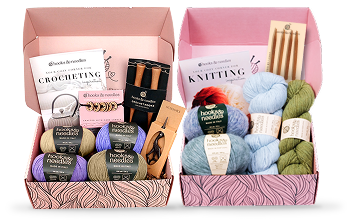
Here is what a genuinely new monthly project looks like coming out of the packaging, filmed on arrival.
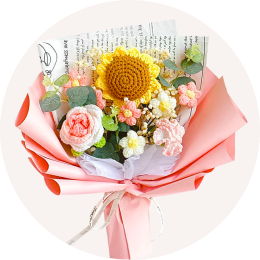
I am so excited for my monthly crochet box! Packaging is so amazing 😲
Pattern Rotation: The Property That Decides Everything Else
Pattern rotation is how often a box introduces a design it has never shipped before, as opposed to reissuing an old one in fresh yarn. A box with true rotation writes or licenses a new pattern for each cycle. A box without it keeps a small library — often six to ten designs — and cycles them past subscribers on a loop, changing the colourway and calling it new.
You can usually tell from the archive. Boxes with real rotation publish past months and the projects differ by construction: a top-down hat, then a flat-knit scarf worked in seed stitch, then a small circular piece on double-pointed needles. Boxes without it publish past months where every project is a rectangle or every project is a hat.
What goes wrong here
The mistake almost everyone makes is judging rotation from the marketing photos. Styled shots hide construction. Two hats photographed on the same model in different light look like two projects, but if both are worked flat and seamed, you have learned one skill twice and paid for it twice.
Read the pattern description instead of looking at the picture. Look for the words that describe how the piece is built — in the round, top-down, seamed, short rows, colourwork. Those words change when the project genuinely changes.
Which Boxes Deliver New Knitting Projects Each Month?
Tracking three consecutive shipments is the only test that settles it, because any box can look varied over a single month. Order in January, keep the pattern sheets, and compare February and March against them on three points: the stitch pattern, the construction method, and whether you needed a tool you did not already own.
Three broad models exist in the monthly knitting project box market, and they behave very differently over a quarter.
| What matters | Rotating-design box | Fixed-library box | Yarn club with pattern |
|---|---|---|---|
| New pattern each cycle | Yes, written or licensed per month | Reissued from a small set | Sometimes; pattern is secondary to the yarn |
| Construction variety over three months | Flat, in the round, shaped | Usually one construction repeated | Unpredictable, depends on the guest designer |
| Yardage matched to the project | Calculated for the pattern plus a margin | Often a fixed weight per box | Fixed skein count, pattern written to fit |
| Skill progression | Builds month to month | Flat after month two | Varies wildly |
Reliability of shipping matters here too, because a box that skips a month has broken the progression whether or not the patterns were new. If you are comparing on that basis as well, this breakdown of what a reliable monthly knitting subscription actually ships and when is the practical companion to the pattern question.

From the Hooks & Needles shop
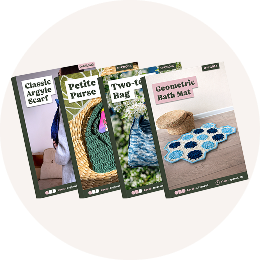
10 Knitting Patterns (Sent Via Email)
If you want to audit variety before committing to any subscription, ten patterns in one download lets you compare constructions side by side and see what genuine project range looks like.
Yardage and Yarn Weight: Whether the Project Finishes
Yardage is the length of yarn in the box, not its weight in grams, and it is the single most common reason a monthly project stalls. Yarn weight category — lace, fingering, DK, worsted, chunky — describes thickness. A box that ships a fixed 200 grams every month is shipping wildly different yardage depending on which category that 200 grams happens to be.
A well-specified box states yardage for the project and includes a margin, usually ten to fifteen percent. That margin is what covers a swatch, a re-knit of the brim, and the tail you need for grafting.
What goes wrong here
Knitters run out of yarn in the last five percent of a project far more often than they run out early, and the cause is almost always tension rather than a short skein. Tension is how tightly you form each stitch; gauge is the resulting number of stitches and rows over ten centimetres. Knit looser than the pattern's gauge and you consume more yarn per row without noticing until the ball goes light.
Swatch first. It costs twenty minutes and it is the difference between a finished hat and a hat missing its crown, which is exactly the argument made in this piece on what skipping a gauge swatch actually costs you in time.
Tools and Fibre: What Is Worth Paying More For
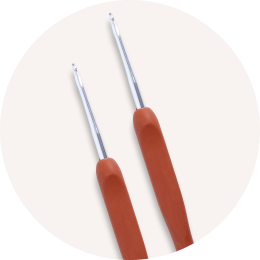
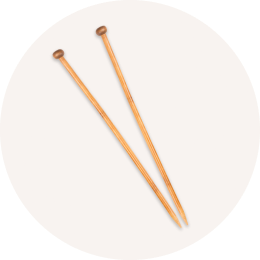
Tools are where box pricing diverges most and where the value is least obvious. Month one should include needles, because you cannot start otherwise. Months two and three should include needles only when the project genuinely needs a size or type you do not yet have — a shorter circular, a set of double-pointed needles for a crown decrease.
Worth paying more for: smooth needle joins on circulars, wool that has been treated well enough to block into shape, and pattern writing that spells out the shaping row rather than saying "decrease as established". Blocking is wetting or steaming a finished piece so the stitches settle; a yarn that will not block is a yarn that will look homemade in the unflattering sense.
Not worth paying more for: branded stitch markers, project bags, tape measures after the first one, and extra grams of an acrylic you will not use again. Those inflate the perceived value of a box without changing the finished piece at all.
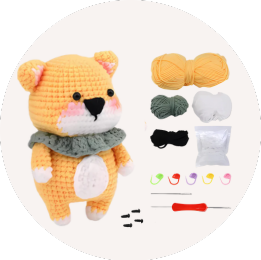
Fibre is the exception where the premium is real, and merino is the usual reason — this explanation of why merino behaves so well in knitting and crochet covers what the softness actually buys you. If you are still assembling a base kit rather than relying on the box, something like the  35-Piece Knitting Kit: Perfect for Beginners removes the tool question from the comparison entirely.
Skill Progression: The Property Nobody Advertises
Progression means each month asks for one new technique you did not use last month. Cast on and knit stitch in January. Purl and ribbing in February. Decreasing in the round in March. That sequence produces a knitter, not just three objects.
Boxes without progression stay at the same difficulty forever, usually because a flat difficulty level generates fewer support emails. You will recognise it when month three feels comfortable in a way that is slightly boring.
Check the skill labels across the archive. If every past month says "easy", the box has decided in advance that you will not improve.
The opposite failure exists too. A box that jumps from garter stitch to cabled colourwork in two months produces a half-finished project and a knitter who blames themselves rather than the curriculum.
Ready to start a project you will actually finish?
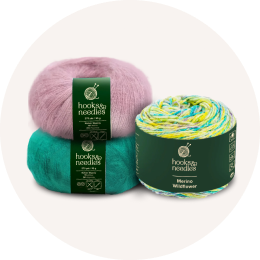
Hooks & Needles delivers a complete yarn project to your door every month — coordinated yarn, the right hooks or needles, and a pattern written to be followed rather than decoded. Pause or cancel whenever you like.
Use LEARN20 for 20% off your first box

Before You Start
Do the three-month test before you commit to a year. Most boxes let you take a single month or pause after one, and one shipment plus a public archive tells you nearly everything the annual plan would.
Ask for yardage in writing if the product page only lists grams. A box that answers that question quickly is a box that calculated it.
And keep your pattern sheets. A knitting project subscription earns its keep over a year, not a month, and the folder of finished patterns is how you can tell.
FAQ
My box shipped a yarn I cannot buy more of and I ran short. What do I substitute?
Match the yarn weight category first and the fibre second. A different DK-weight wool will knit to a similar gauge even if the colour is slightly off, and you can hide the join at a seam, an underarm or the inside of a brim. If nothing in the same category is available, go one category finer and hold two strands together — check the combination against your swatch before committing.
The pattern calls for double-pointed needles and I only have straights. What now?
For a crown decrease or a small circumference, the magic loop method on one long circular needle works as a direct replacement — the stitches sit on the cable instead of on multiple needles. Straight needles cannot substitute for anything worked in the round, though. If you have neither, knit the piece flat and seam it, accepting one visible join.
The box recommends a specific needle size and mine is a size off. Is that fine?
Only your swatch can answer it. Knit ten centimetres square on the needle you have and count stitches against the pattern's stated gauge. Too many stitches means you are knitting tight and should go up a size; too few means go down. Needle size in the pattern is a starting suggestion, not an instruction — gauge is the instruction.
The box I want is closed to new subscribers. What gets me the same outcome?
Buy a pattern bundle with genuine construction variety and pair it with yarn you choose per project. You lose the curation and the surprise, but you keep the progression, which is the part that actually builds skill. Set yourself one project a month with a deadline, because the deadline is the other thing a subscription was quietly providing.