Short answer
- Bamboo adds drape, weight and a faint sheen, and it takes away spring — so ribbing and cables flatten in direct proportion to how much bamboo is in the blend.
- At around 30% bamboo you keep most of merino's stitch definition; at 50% the fabric starts behaving more like a drapey woven than a knit.
- Warmth comes from trapped air, and bamboo's smooth fibre packs down rather than lofting up, so a bamboo wool blend wears cooler than the same weight in pure wool.
- Wash and hang every bamboo-blend swatch before you trust its gauge, because almost all of the growth happens in the first soak.
Bamboo in a wool blend does three things: it adds drape, it adds a low sheen, and it removes spring. That last one is the part most knitters do not expect, because they buy a bamboo merino blend for the softness and assume they are keeping wool's bouncy, sculpted stitch definition on top of it. You are not. You are trading it.
To put numbers on the trade, I knitted three 4-inch swatches on the same 4 mm needles in the same DK weight — 100% merino, 70/30 merino-bamboo, and 50/50 — each one half stockinette and half 2x2 rib. Then I washed and hung all three, because an unwashed swatch tells you almost nothing about a bamboo blend. Here is what changed, and why sock yarn spinners keep reaching for bamboo despite it.
The Swatch Test: Same Needles, Three Very Different Fabrics
Off the needles, the three swatches looked closer than they behaved. The pure merino measured 22 stitches and 30 rows over 4 inches. The 70/30 came in at 21 stitches and 28 rows, and the 50/50 at 21 stitches and 27 rows — slightly looser, because the bamboo content makes the yarn slicker and the stitches settle wider as you work.
The wash is where they separated. After a fifteen-minute soak in lukewarm water and a gentle squeeze in a towel, the merino drew in very slightly and bloomed, gaining fuzz and thickness. The 70/30 grew about 2 mm in length once hung to dry. The 50/50 grew roughly 6 mm in length on a 4-inch swatch and lost width to match, which on a sweater body is an inch of unplanned drop.
Gauge — the number of stitches and rows in a measured square of fabric — is the least interesting thing that changed here.
Hold the three swatches by one corner and the difference is obvious without a ruler. The merino stands away from your hand. The 70/30 falls in a soft curve. The 50/50 hangs straight down like jersey fabric, and if you hold all three to the light, the bamboo blends catch it along the stitch legs while the merino stays matte. My control skein was a straightforward  Merino Majesty Yarn, chosen because it is unremarkable in the best way.
What Bamboo Wool Does to Stitch Definition
Wool crimps. Each fibre has a natural wave in it, and that wave is what makes a knitted stitch push back against its neighbours, hold a cable, and pop a rib. Bamboo viscose is extruded smooth and straight, so it has no crimp to contribute and it dilutes the crimp of whatever it is blended with.
On my swatches the 2x2 rib told the story. The merino rib pulled in to 2.5 inches and sprang back when stretched. The 70/30 rib sat at 3 inches and recovered slowly. The 50/50 rib barely pulled in at all and stayed stretched after the wash, which is exactly what you do not want at a cuff, a hem or a sock leg.
Isn't bamboo yarn just viscose with better marketing?
Largely, yes — most bamboo yarn is viscose regenerated from bamboo pulp, not a fibre mechanically combed from the plant. That matters here because it behaves like other viscose fibres: smooth, heavy when wet, strong in drape and weak in recovery. Genuine mechanically processed bamboo linen exists but is rare and feels closer to flax.
The mistake this causes is a specific one. Someone picks a textured pattern — a cabled pullover, a brioche cowl, a rib-heavy hat — then substitutes a bamboo blend because the skein feels nicer in the shop, and the finished piece reads as blurred and heavy rather than sculpted. If your pattern's whole appeal is texture, stay with a high-crimp wool; the qualities that make merino such a reliable choice for knitting and crochet are precisely the ones bamboo softens.
Is Bamboo Yarn Warm? Air Matters More Than Fibre
A knitted fabric is warm because it traps still air, not because the fibre itself is warm, and bamboo works against air-trapping. The smooth filaments lie together closely, the yarn packs down under its own weight, and the fabric ends up denser and thinner than a wool equivalent at the same gauge.
So a bamboo wool blend is warm in the way a light cardigan is warm rather than the way an aran sweater is. My 50/50 swatch felt cool to the palm for the first few seconds and then warmed up, which is the same sensation you get from a wool-silk blend. For a spring top, a shawl or a garment worn indoors, that is a feature.

From the Hooks & Needles shop
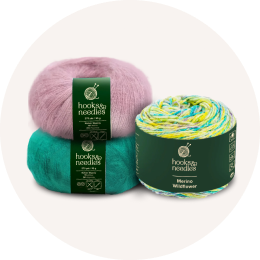
Bamboo Touch Yarn
If the drape and sheen described above are what you are after — flowing shawls, summer tops, anything you want to fall rather than stand — this is the fibre behaviour to knit with rather than fight.
Where it goes wrong is winter accessories. A bamboo-heavy hat sits flat on the head, loses its brim spring within a few wears, and insulates noticeably less than the wool version the pattern was written for.
Why Sock Yarns Use Bamboo Anyway
Sock yarn does not need spring nearly as much as it needs moisture movement, and that is bamboo's real contribution. Viscose fibres wick sweat away from the skin quickly, and a smooth fibre surface means less friction inside a shoe, which is why bamboo wool socks feel cool and slick on a long day rather than damp and sticky.
The trade-off in a sock is different
A sock is knitted at a much tighter gauge than a sweater, usually 30 or more stitches to 4 inches, and a tight fabric holds its shape through structure rather than through fibre recovery. That is why a 20–25% bamboo sock yarn can lose some elasticity without the leg sagging — the stitch density is doing the work.
It still needs help with abrasion. Bamboo is strong under tension but weak against rubbing, so a good sock blend pairs it with nylon or polyamide at the heel and toe, and a bamboo-wool yarn with no nylon at all will thin at the heel faster than a plain wool sock will. Most commercial sock yarn is also superwash-treated, and the trade-offs that come with superwash processing stack with bamboo's, since both reduce grip between fibres.
If you want to feel the difference in your own hands, knit one plain sock in a wool-nylon yarn and its pair in a bamboo blend, then wear them on the same day. A patterned sock makes the comparison easier to judge, since the motif shows you exactly how much definition you kept — something like the  Bats & Pumpkins Socks Knitting Pattern gives you a clear motif to read.
Picking a Ratio for the Project You Actually Have
Ratio is the whole decision, and you can predict the result closely enough from the label. Below about 20% bamboo you get sheen and a little slip with the wool still in charge. At 30% you get real drape and a softening of texture. At 50% bamboo is in charge and you should treat the yarn as a drapey fibre that happens to contain wool.
Match that to what the garment has to do. Anything that must hold a shape against gravity — a fitted sweater, a hat brim, a bag, a cuff — wants 20% bamboo or less. Anything that should fall — a shawl, a wide-necked tee, a cardigan you want to hang open in a soft line — is where 30–50% earns its place.
Before you commit a sweater quantity, work through this:
If you are still choosing between fibre families rather than ratios, the differences between merino, alpaca and cotton for beginners are the useful next comparison, since alpaca drapes for the same reason bamboo does.
The Edges: Blocking, Hooks and Crochet
Blocking a bamboo blend is not a correction, it is a commitment. Wool has memory and can be blocked generously then coaxed back; bamboo sets where you leave it, so pinning a bamboo-heavy piece out to an optimistic measurement gives you a garment that stays that size permanently. Block to the measurement you want to live with.
Drying position matters more than pin tension. Dry flat and the fabric keeps its width; hang it wet and it lengthens, which is genuinely useful if you want a shawl to gain a few inches of wingspan and genuinely annoying if you did not plan for it. The same logic applies to wear — store finished bamboo-blend garments folded, following the washing and storage approach that works for wool yarn, because a hanger will stretch the shoulders out over a season.
A note for crocheters
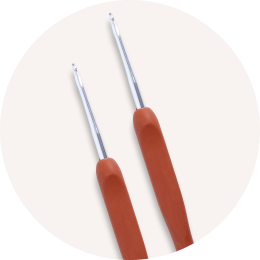
Crochet fabric is denser than knitted fabric at the same yarn weight, so bamboo's drape reads as fluid rather than floppy in single and double crochet, and a bamboo blend often flatters a crochet shawl more than a knitted one. The catch is splitting: the smooth plies separate under a hook point, and a hook with a rounder, less pointed head reduces that considerably.
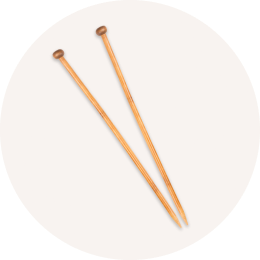
One small thing that saves a lot of frustration on either craft — bamboo blends slip on slick metal tips. Working a bamboo-heavy yarn on bamboo needles or a wooden hook gives you back the grip the fibre took away, and if you have not compared them, the honest comparison of bamboo versus metal needles covers where each one earns its place.
Ready to start a project you will actually finish?
Hooks & Needles delivers a complete yarn project to your door every month — coordinated yarn, the right hooks or needles, and a pattern written to be followed rather than decoded. Pause or cancel whenever you like.
Use LEARN20 for 20% off your first box

Where To Go From Here
The useful reframe is to stop thinking of bamboo as a softness additive and start thinking of it as a drape additive that happens to be soft. Once you read the percentage on the label as a spring-versus-flow dial, substituting becomes a straightforward decision instead of a gamble.
Your next step is one swatch. Take whatever bamboo blend is already in your stash, knit it in the stitch pattern you were planning, wash it, hang it, and measure — that half hour tells you more than any yardage of reading, including this.
What to remember
- Read the bamboo percentage as a spring dial: under 20% keeps wool's behaviour, 50% replaces it with drape.
- Never trust a pre-wash gauge in a bamboo blend — soak, hang, dry and measure again.
- Keep textured patterns, cuffs and hat brims in high-crimp wool, and send bamboo blends to shawls, tees and open cardigans.
- For socks, look for nylon alongside the bamboo, since bamboo resists tension well but abrades quickly at the heel.
- Block bamboo blends to the measurement you want permanently, because they set rather than remember.
FAQ
What is bamboo wool yarn and how is it different from regular wool?
Bamboo wool yarn is a blend of sheep's wool — usually merino — with bamboo viscose, a smooth fibre regenerated from bamboo pulp. Compared with pure wool it drapes more, shines slightly, wicks moisture faster and feels cooler, and it has noticeably less elasticity, so ribbing pulls in less and stitch definition looks softer. The higher the bamboo percentage, the stronger all of those differences become.
Can I substitute a bamboo merino blend for the wool in my pattern?
Yes for flowing shapes, cautiously for fitted ones. Swatch, wash and hang before you decide, then shorten any vertical measurement by about an inch per 20 inches of length to allow for growth. Avoid the substitution altogether if the pattern depends on cables, brioche or deep ribbing to hold its shape.
How should I wash a finished bamboo wool garment?
Hand wash in lukewarm water with a wool-safe detergent, support the weight when you lift it out because bamboo blends get heavy and stretchy when wet, then press the water out in a towel. Dry flat unless you specifically want the piece to lengthen. Skip the machine even if the wool content is superwash, since agitation accelerates abrasion on the bamboo.