The best knitting kit for a complete beginner is the one that pairs a written pattern for a small, flat project with the exact needles and yarn that pattern calls for. Everything else — the stitch markers, the row counter, the tapestry needles, the tote bag — is secondary, and a kit with thirty tools and no pattern will leave you further from a finished object than a kit with one pair of needles, one ball of yarn and four clear pages.
You are probably comparing three or four listings right now, all of them promising the same thing, all of them showing a photo of a finished scarf that nobody explains how to make. By the end of this you will know which parts of a kit decide whether you finish, which parts are padding, what changes the answer if you are left-handed or arthritic or impatient, and the specific buying mistakes that send beginner kits into a drawer.
The Short Answer: Buy the Pattern, Not the Toolbox
Rank any kit by one question — can a person who has never held needles finish the project inside it without opening YouTube? That single test sorts the market faster than any feature list. Most kits fail it not because the contents are bad but because the instructions assume you already know how to cast on, how to hold the yarn, and what "k2tog" means.
Dani, who joined our community last spring, bought two kits within six weeks. The first was a 40-piece set with a printed card that said "cast on 30 stitches and work in garter stitch until desired length". She got as far as the slip knot and stopped, because nothing in the box explained what came next.
The second kit contained less: one skein of chunky wool, one pair of 8mm needles, one tapestry needle, and a twelve-page booklet with photographs of every stage including how to hold the needles. She finished a cowl in nine days. The difference was not the hardware.
Fewer tools, better instructions. That is the whole ranking.
What a Genuinely Complete Starter Kit Contains
- Enough yarn for the project, in a smooth light-coloured worsted or chunky weight
- Needles in the size the pattern specifies — not a set of nine sizes you must choose between
- A pattern with a photo or diagram for cast-on, knit stitch, and cast-off
- A blunt tapestry needle for weaving in ends
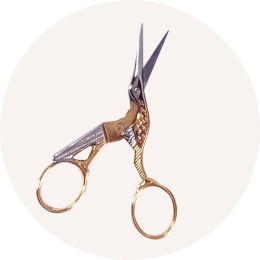
- Scissors, or the honest statement that you need your own
If a listing does not show you the pattern pages, assume they are thin. Sellers photograph what they are proud of. For the wider question of what belongs in your workbasket beyond the first project, the beginner tool checklist for knitting and crochet separates the genuinely useful from the ornamental.
What Changes the Answer: Yarn Weight, Needle Material and Hands
Yarn weight is the category system that tells you how thick a yarn is, running from lace at the fine end to jumbo at the thick end. For a first project you want worsted (category 4) or chunky (category 5). Thinner yarn means more stitches, more rows, and more chances to lose your place before anything looks like fabric.
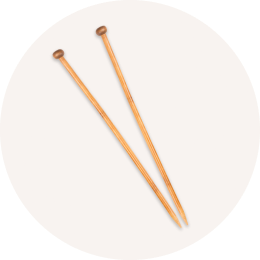
Needle material changes the difficulty more than most people expect. Bamboo and wood grip the yarn slightly, so stitches sit still while you work out what your hands are doing. Slick metal needles are faster once your tension settles, and merciless before that — stitches slide off the tip while you are looking at the pattern.
Do I need to knit a gauge swatch for a scarf?
Gauge is the number of stitches and rows you get over ten centimetres, and it decides whether a garment fits. For a scarf or a cowl, no — the width is whatever it turns out to be. Start swatching when you make your first hat, because a hat that is two centimetres too wide slides over your eyes.
Hands matter too. If your grip tires quickly or your joints ache, chunky yarn on 8mm needles is kinder than worsted on 4mm, because you finish rows faster and hold the needles for fewer hours per centimetre of fabric.
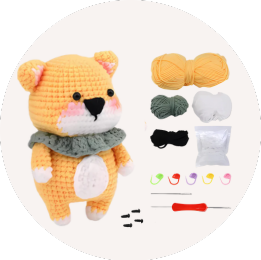
For the tool side specifically, a set like the  35-Piece Knitting Kit: Perfect for Beginners covers the hardware you will keep reaching for across your first ten projects — needles in several sizes, markers, a measuring tape — and pairs naturally with a pattern chosen separately rather than replacing one.
Mistakes People Make Buying a Knitting for Beginners Kit
Buying the kit with the most pieces
Piece counts are marketing. A 60-piece set includes six needle sizes you will not touch for a year and four gadgets you cannot yet identify. The fix: count the pattern pages, not the pieces.
Choosing dark or fluffy yarn because it photographs well
Black yarn hides your stitches, and mohair-style fuzz makes a dropped stitch nearly impossible to find and fix. The fix: pick a light, smooth, solid-coloured yarn for the first two projects and save the textured skeins for when your hands know what they are doing.
Starting with a sweater
Sweaters involve shaping, seaming, gauge and roughly twenty hours before you can tell whether it fits. Most abandoned kits are garment kits. The fix: a cowl, a dishcloth or a headband first — something that reaches "finished" within two weeks.
Assuming the kit will teach you to cast on
Casting on is the single step where most beginners stall, and plenty of kits give it one line. The fix: learn one cast-on method before your yarn arrives; the walkthrough of the easiest cast-on methods for beginners covers the two worth knowing.
Not checking whether needles are included at all
Some listings marketed as a learn to knit kit are yarn-and-pattern bundles with needles sold separately. The fix: read the contents list, not the title.
One habit that saves more first projects than any tool: cast on twenty stitches in scrap yarn and knit ten rows before you touch the kit yarn. Your first rows are always your worst, and it costs nothing to make them on yarn you do not care about.
The Edges: When a Kit Is the Wrong Purchase
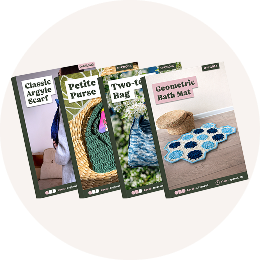
If you already own needles and a stash, a starter knitting box duplicates what is in your cupboard. What you are short of is projects worth starting, which is a pattern problem rather than an equipment one — a set like  10 Knitting Patterns (Sent Via Email) answers that without adding another pair of 5mm needles to the drawer.
If you are buying for someone else, a one-off kit is a gamble on their taste in yarn colour and project type. A subscription with a pause option lets them stop after one month if knitting turns out not to be their thing.
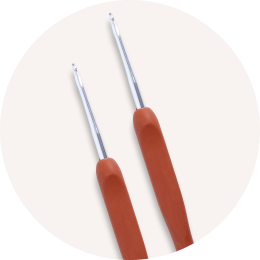
And if you are not certain knitting is the craft you want, a knitting kit is the wrong first purchase entirely. Crochet uses one hook, one live stitch and forgives mistakes far more readily, which suits some hands better from day one.
This one-minute clip shows a double crochet worked at normal speed, which is the fastest way to see whether the motion appeals to you before you commit to needles.
DOUBLE CROCHET FOR COMPLETE BEGINNERS
If it does appeal, the comparison of knitting versus crochet for beginners lays out which craft suits which kind of learner, and neither answer is wrong.
Ready to start a project you will actually finish?
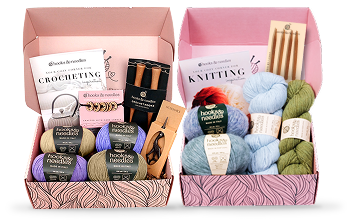
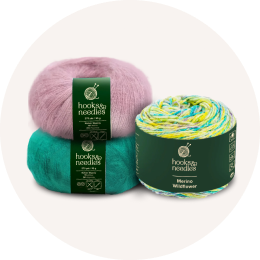
Hooks & Needles delivers a complete yarn project to your door every month — coordinated yarn, the right hooks or needles, and a pattern written to be followed rather than decoded. Pause or cancel whenever you like.
Use LEARN20 for 20% off your first box

The Short Version
Judge a beginner knitting kit by whether it can carry you from an empty needle to a finished object without outside help. That means a real pattern, a small project, light smooth yarn in worsted or chunky weight, and needles in the one size the pattern names.
Tool counts, tote bags and colour ranges are tiebreakers, not deciders. A kit that stalls you at the cast-on has failed no matter how many stitch markers it contains.
What to remember
- Count the pattern pages before you count the pieces.
- Choose worsted or chunky yarn in a light, solid colour for your first two projects.
- Bamboo or wooden needles grip the stitches while your tension is still settling.
- Start with a cowl, headband or dishcloth — something finished within two weeks.
- Practise ten rows on scrap yarn before you cut into the kit yarn.
- Buy a spare ball in the same dye lot if you expect to pull work back.
FAQ
Can I just buy yarn and needles separately instead of a kit?
You can, and it often costs less. The risk is mismatch — picking a yarn weight the pattern was not written for, or needles two sizes off, which changes your fabric and your gauge. A kit's real value is that someone already checked those three things agree with each other.
What should my first knitting project actually be?
A garter stitch cowl or a dishcloth. Both are flat rectangles worked in one stitch, which means you repeat the same movement until your hands learn it, and neither needs to fit anybody. Hats and socks come next, once casting on and casting off feel automatic.
Are bamboo or metal needles better for a beginner?
Bamboo, in almost every case. The slight grip holds stitches on the needle while you look away at the pattern, which prevents the most demoralising early problem — a row that unravels itself. Move to metal later when you want speed and your stitches no longer escape.
Does a monthly subscription replace a one-off starter kit?
It replaces the buying decision, month after month, rather than just once. A single kit gives you one project; a subscription gives you a sequence where each project introduces one new skill. If you already know you want to keep knitting past the first scarf, the sequence is the more useful thing.