Short answer
- A battery fabric shaver with an adjustable guard is the safest tool for handmade knitwear — start on the widest gap setting and only narrow it if the pills survive.
- Lay the piece flat on a hard surface. Almost all de-pilling damage happens when fabric is held in the hand and a stitch lifts up into the blade.
- Sweater combs and sweater stones cut slower and cost less. Use them on loosely spun singles, mohair and alpaca, where a rotating blade can slice through a whole ply.
- Test on an inside hem or your gauge swatch before you touch the front of a sweater.
Two identical raglan pullovers, same yarn, same gauge, both worn twice a week for a winter. One was gone over three times with a battery fabric shaver held flat on a table. The other was scraped with a sweater stone, in the hand, while watching television. The shaved one still has crisp stitch definition and a smooth surface you can read the columns of knit stitches through. The scraped one feels thinner across the underarms and one rib on the cuff has gone slightly slack where a strand was worn through.
The difference is not the fibre and it is not the wash routine. It is the tool, how far its cutting surface sits from the fabric, and whether the fabric was supported while it was used. Pills form when short fibres work loose from the yarn's twist, tangle together and ball up — friction at cuffs, underarms and where a bag strap sits. Removing them is a cutting job, and every cutting job comes down to what you cut with and what sits underneath.
Cutting Height: What Lets You Remove Pilling From Knitwear Safely
Cutting height is the gap between the blade and the fabric surface, set by the guard — the perforated metal dome on a fabric shaver, or the depth of the teeth on a comb. That gap is the only thing standing between a pill and your stitches. Set it wide and you cut the tops off pills. Set it flush and you cut the fabric.
Hand-knit and crocheted fabric is thicker and more three-dimensional than a machine-knit shop sweater. Individual stitches stand proud of the surface, so a shaver set for a fine jersey tee will meet the tops of your knit stitches, not just the fuzz above them.
How to set it the first time
- Choose the widest guard setting or the tallest spacer your shaver came with.
- Run it over your gauge swatch, or the inside of a hem where nobody looks.
- Check the collection chamber. Fuzzy grey balls mean you are cutting pills. Long straight strands mean you are cutting yarn — widen the gap or stop.
- Only step down a setting if the pills come away half-cut and the chamber shows no long strands.
The Cutting Mechanism Changes What Happens to a Loose Ply
Three mechanisms exist, and they fail in different ways. A rotating blade slices whatever comes through the guard holes. An abrasive block — a sweater stone or pumice-type brick — tears pills off by dragging a rough surface across them. A comb's teeth catch pills between them and shear them against a hard edge.
The blade is the only one that cuts at a fixed distance from the fabric. The stone and the comb both depend on how hard you press, which means they depend on your hand being consistent for twenty minutes. Mine is not. That is why an abrasive block on a single-ply yarn thins the fabric so easily — it does not distinguish between a pill and the yarn feeding into it.
| What matters | Battery fabric shaver | Sweater comb or stone |
|---|---|---|
| Risk to stitches | Low if the guard is set wide; high on cables and seams | Depends entirely on hand pressure |
| Speed on a whole sweater | 15–20 minutes | An hour or more |
| Best on | Plied wool, cotton, superwash, tightly spun yarn | Singles, mohair, alpaca, anything with a halo |
| What goes wrong | Fabric pulled into the blade because it was unsupported | Gradual thinning you notice weeks later |

From the Hooks & Needles shop
Rechargeable Lint Remover
A rechargeable motor holds steady speed as the battery drains, which matters because a slowing blade drags at the fabric instead of cutting cleanly through pills.
What is worth paying more for, and what is not
Pay for a stable motor speed, an adjustable or interchangeable guard, and a blade you can actually remove to clean. Those three things decide whether the tool cuts or drags.
Do not pay for a large collection chamber, a fabric bag to store it in, or a wider cutting head. A big head bridges across the shaping of a sleeve and stops making contact where you need it. Do not pay extra for cordless if the corded version has a better guard — you are working at a table anyway.
Want the yarn, the pattern and the guidance in one box?
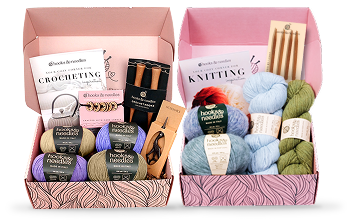
Each Hooks & Needles box arrives with the yarn, the tools and an exclusive pattern already matched to each other, plus instructions that do not skip the step you are stuck on. Nothing to source, nothing to substitute.
Use LEARN20 for 20% off your first box

Twist and Fibre Decide How Aggressive You Can Be
Twist is how tightly the fibres are spun together, and plies are the number of spun strands twisted into the finished yarn. A four-ply worsted wool holds its fibres tightly, so cutting the surface takes nothing structural away. A single — one strand, softly spun, no plies — has no second strand holding it together. Cut into it and the yarn narrows at that point permanently.
Fibre length matters just as much. Merino has short fibres that work loose quickly, so merino pills fast but shaves well. Mohair and alpaca have long fibres that stand up off the surface as a halo, and a blade will take the halo off along with the pills, leaving a patch that looks shorn.
Superwash-treated wool is a particular case. The treatment that makes it machine washable also makes the surface slicker and the fibres more prone to migrating out of the twist, so superwash pieces pill sooner than untreated wool of the same weight — a trade-off covered in more depth in this look at what superwash wool costs you in exchange for easy washing.
Cotton barely pills at all. If a cotton piece looks fuzzy, that is usually lint from something else in the wash, and a lint roller handles it.
Common Mistakes, and the Fix for Each
De-pilling in the hand or on your lap. Fix: lay the piece flat on a table or a cutting mat, one section at a time, and smooth it with your free hand a few inches from where the blade is working. Unsupported fabric flexes up into the cutting surface.
Stretching the fabric taut to make it smooth. Fix: let it sit at its natural width. Stretching opens the gaps between stitches and gives the blade access to strands it should never reach.
Working before washing. Fix: wash and dry the piece first. Dirt and body oils stiffen pills and make them harder to cut, and a wash often relaxes minor surface fuzz on its own — the process in this guide to washing a handmade sweater without wrecking it is the right starting point.
Pressing harder when the pills stop coming off. Fix: clean the blade. A chamber packed with fuzz stops the blade turning freely, and pressure is not the answer to a clogged tool.
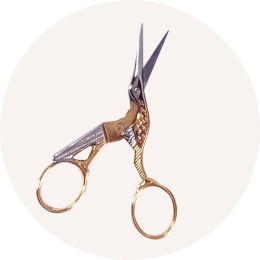
Pulling pills off with your fingers. Fix: snip them with small curved scissors instead. A pill is anchored to a fibre still held in the twist, and pulling drags that fibre out of the yarn.
Going over the whole garment every time. Fix: treat only the friction zones — underarms, inner sleeves, the seat of a cardigan, wherever a strap sits. Every pass removes a little material, so passes you do not need are damage you did not have to take.
The Short Version
The tool you pick decides which failure mode you are exposed to, and the surface you work on decides whether that failure happens at all. A shaver with a wide guard, used on a flat table, on a clean and unstretched sweater, is close to risk-free on plied wool. The same shaver in your lap on a single-ply mohair cardigan will cost you a stitch.
What to remember
- Widest guard setting first, always — narrow it only after a clean test on a swatch or hem.
- Flat, supported, unstretched fabric. This single habit prevents most de-pilling damage.
- Blades for plied and tightly spun yarn; combs for singles, mohair and alpaca.
- Check the collection chamber. Long strands mean stop immediately.
- Spend on guard adjustment, motor stability and a cleanable blade. Skip the big head and the storage bag.
FAQ
I do not own a fabric shaver. What can I use tonight?
A fine-toothed comb, the kind sold for hair, works on most plied wool. Hold it at a shallow angle, about 30 degrees to the surface, and draw it downward in short strokes with the fabric flat. A new disposable razor also works, but only on tightly plied smooth yarn, held almost flat with no pressure at all — and never near ribbing, seams or cables.
Sweater stones are hard to find where I live. Is pumice a fair swap?
A fine-grade pumice stone will do the same job, but check the grit against your forearm first — coarse pumice tears rather than shears, and it sheds grit into the fabric. A comb is the safer substitute for the same purpose, especially on softly spun singles, because you control the depth with the teeth rather than with pressure.
Will a lint roller or sticky tape fix pilling?
No. Tape and lint rollers lift loose surface fuzz and stray fibres that are sitting on top of the fabric, which is a different problem. A pill is anchored to fibres still held in the yarn, so tape either leaves it in place or tugs at the strand holding it. Use tape for shedding and lint, and a cutting tool for pills.
Can I just cut the pills off individually instead of buying a tool?
Yes, and on a delicate piece it is the lowest-risk method there is. Use small curved embroidery scissors, slide the blades under the pill parallel to the fabric, and snip above the surface rather than at it. It takes an evening for a full sweater, which is why it suits mohair, alpaca and heirloom pieces rather than everyday knits.