Short answer
- Nine times out of ten the fabric is wrong because the yarn sits one weight category away from what the pattern was written for — check wraps per inch before you blame your stitches.
- A hook or needle in the size the pattern names still gives the wrong gauge if your tension differs; the swatch decides the size, not the pattern.
- Fibre and twist control how stitches read: a haloed single-ply will swallow cables and bobbles no matter how neatly you worked them.
- Hooks & Needles pairs yarn to pattern before either is finalised, which removes the substitution guess that causes most of these mismatches.
The scarf is lying on the table and it is 16 cm wide instead of the 25 cm the pattern promised. The cables that looked like rope in the photo have flattened into vague ridges you can only see if you tilt it towards the window. The fabric is stiff enough to stand on one edge, and the ends curl in like a scroll. You followed every row. You counted.
None of that is a stitching fault, and re-reading the pattern will not tell you what happened. Work backwards instead, from the physical thing in front of you to the decision that produced it. The causes below are ordered from most to least likely, and each one ends with a test you can run in under ten minutes.
The Yarn Is a Different Weight Than the Pattern Was Written For
A pattern is a set of instructions for producing a specific fabric at a specific size, and it assumes a yarn thickness. Swap a DK (category 3, roughly 21 stitches to 10 cm in stocking stitch) for a worsted (category 4, roughly 17 stitches to 10 cm) and every measurement in the pattern shifts. Go the other way and your finished piece shrinks by a fifth.
The trap is that ball bands lie by omission. "Aran" from one mill and "aran" from another can differ by 15% in thickness, and American worsted often sits between British DK and aran. The word on the label is a marketing category, not a measurement.
Can I just go up a hook size to make a thinner yarn work?
Up to a point. A half-millimetre change will buy you a few stitches over 10 cm, but pushing a DK yarn to aran gauge produces a loose, gappy fabric with no structure — fine for a shawl, wrong for a bag or a cushion cover. If you need more than one full millimetre of correction, change the yarn instead.
The substitution problem is also why a matched kit is more forgiving than a self-sourced project, something covered in more detail in this piece on why a curated kit forgives a first project more than sourcing your own materials. The yarn has already been tested against the pattern.
How to confirm it: wrap the yarn snugly around a ruler for one inch without stretching it and count the wraps. Around 11 to 12 wraps means DK. Around 9 to 10 means worsted or aran. If that number does not match what the pattern expects, you have found your cause and nothing else in this article applies.
Your Hook or Needle Size Is Right on Paper and Wrong in Your Hands
Two people can work the same yarn on the same 4 mm hook and produce fabrics that differ by three stitches over 10 cm. Tension is a personal constant, and the size printed in a pattern is only the size that worked for the designer. It is a starting point for your swatch, not an instruction.
Tight tension shows up as the stiff, narrow, curling fabric described at the top of this article. Loose tension shows up as a piece that grows past its schematic and sags after a week of wear. Both look like faultless stitching up close.
Swatch bigger than you think you need. A 10 cm square gives you nothing to measure, because the edge stitches of any swatch behave differently from the ones in the middle. Work at least 15 cm across and 15 cm tall, then measure the central 10 cm and count half stitches honestly rather than rounding in the direction you want.
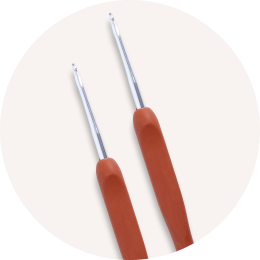
Chunky yarns punish this most, since a single stitch out over 10 cm can mean several centimetres across a finished front. If you are swatching category 5 and 6 yarns, a graded set like these  Large Crochet Hooks for Chunky Yarn lets you move up or down 1 mm at a time instead of guessing.
How to confirm it: compare your swatch to the pattern's stated gauge. Too many stitches over 10 cm means you are tight — go up a size. Too few means you are loose — go down. If your gauge is correct and the fabric is still wrong, the cause is fibre, not size.
The Fibre and the Twist Are Working Against the Stitch Pattern
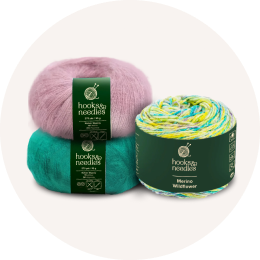
Stitch definition comes from twist. A tightly plied yarn — three or four strands spun hard together — holds an edge, so cables, bobbles and post stitches keep their shape. A loosely spun single-ply with a soft halo blurs everything within one wash, which is why your cables read as ridges rather than rope.
Drape comes from fibre. Cotton and linen are heavy and inelastic, so they hang straight and grow lengthways under their own weight. Wool has memory and springs back. Acrylic has almost none, so a garment that fits on day one bags at the elbows by day thirty.
The mismatch happens quietly at the shop shelf. A textured blanket pattern worked in brushed alpaca will be beautiful and completely illegible. A drapey lace shawl in mercerised cotton will be crisp and heavy instead of floating.
How to confirm it: untwist 10 cm of your yarn and count the plies, then hold your swatch up by one corner. Two or more plies with visible definition and a swatch that hangs rather than boards means the fibre is fine. A fuzzy single ply under a cable pattern means it never was.
Want the yarn, the pattern and the guidance in one box?
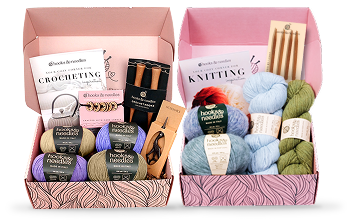
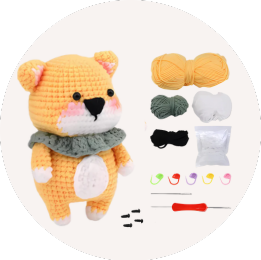
Each Hooks & Needles box arrives with the yarn, the tools and an exclusive pattern already matched to each other, plus instructions that do not skip the step you are stuck on. Nothing to source, nothing to substitute.
Use LEARN20 for 20% off your first box

The Piece Was Never Blocked, or Was Blocked the Wrong Way
Every sample photograph you have ever compared your work against was blocked before it was shot. Blocking — wetting or steaming a finished piece and pinning it to shape until dry — is what opens lace, squares off edges and settles uneven tension. Unblocked work looks like an early draft of itself.
Match the method to the fibre
- Wool and animal fibres: soak 20 minutes in cool water, press out moisture in a towel, pin to measurement, dry flat.
- Cotton and linen: wet block and pin firmly. These fibres take shape well but will not spring back if you overstretch them.
- Acrylic: hover steam only, 5 cm above the fabric. Touching an iron to acrylic melts the fibre permanently — the result is flat and shiny and cannot be undone.
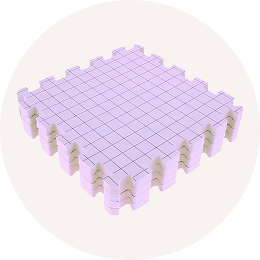
Curling edges on stocking stitch or single crochet are the classic unblocked symptom. So is a granny square that measures 19 cm on one diagonal and 21 cm on the other. Both usually resolve on the pinning mat.
How to confirm it: block the swatch you already made and remeasure it. If the numbers move towards the pattern's, block the finished piece. If they barely shift, blocking was never going to save this one.
How Hooks and Needles Selects Yarn and Pairs It With Each Pattern
Every fault above traces back to one decision made in the wrong order — the yarn chosen first, the pattern chosen second, and the two hoped to agree. The Hooks & Needles curation process runs the other way round, and this is the part of the behind the scenes yarn box story that actually changes your results.
A base yarn comes in from a European mill first and gets swatched before anything is designed around it. We record what it does at three different hook and needle sizes, how much it grows after a soak, whether the plies split under a post stitch, and how much halo it develops after abrasion. Only then does a designer get told what the yarn is good at.
The pattern is then written to those measured properties rather than to a generic weight category. A yarn with soft twist gets a texture-light design with drape; a firm four-ply base gets cables or dense colourwork. Quantities are calculated from the swatched gauge with margin, so you are not finishing a sleeve on faith. Our reasons for buying from specific mills are set out in the sourcing story behind the European yarn we use.
What that does not do is control your tension. The box contains matched yarn, tools and an exclusive pattern with the gauge already established — but the swatch is still yours to make, and it is the one step nothing can outsource. Patterns are written for crochet or for knitting, and each month's release states which; a crochet stitch multiple does not transfer to needles.
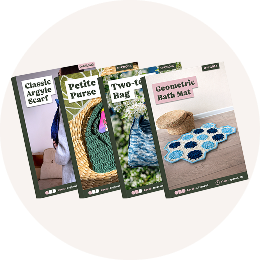
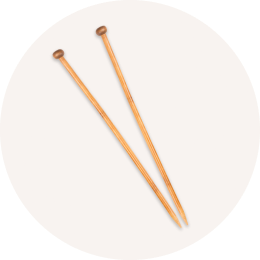
If you would rather build the swatching habit on projects that are already sized and tested, a set like  10 Knitting Patterns (Sent Via Email) gives you ten stated gauges to practise hitting.
Where To Go From Here
Run the tests in order. Wraps per inch takes two minutes and rules out the most common cause outright. If the yarn weight is right, swatch and measure. If gauge is right, look at ply and fibre. Block last, because blocking corrects a small error and hides nothing larger.
The stiff, narrow scarf on your table is almost certainly a weight or tension problem, and both are fixable on the next attempt with no new skill required.
What to remember
- Check wraps per inch before you check anything else: 11 to 12 is DK, 9 to 10 is worsted or aran.
- Swatch 15 cm square, block it, then measure the central 10 cm — edge stitches are not representative.
- Change hook or needle size to hit gauge; the size printed in the pattern is the designer's, not yours.
- Tight ply gives stitch definition, soft single ply gives halo. Match the yarn to what the stitch pattern needs to show.
- Yarn selected and swatched before the pattern is designed removes the substitution guess entirely.
FAQ
My scarf is already finished and too narrow. Can I save it?
Sometimes. Wet block it aggressively — soak for 20 minutes, then pin to the width you want and let it dry fully. Wool will gain 10 to 15% and hold it. If you need more than that, add a border of 4 to 6 rows in a complementary stitch down each long edge, which is faster than reworking and looks deliberate.
Should I frog a garment that came out too big?
Frog it if the difference is more than about 5 cm across the bust, because seams and blocking cannot absorb that. Under 5 cm, you can often take it in at the side seams with mattress stitch and keep the piece. Reclaimed yarn works fine once soaked and dried under light tension to remove the kinks.
My cables disappeared into the yarn. Is there any fix after the fact?
No, and this is the one fault that will not respond to blocking. Halo and soft twist obscure texture permanently, and washing increases it. Keep the piece as a plain textured item and save the pattern for a firm three or four-ply. Nothing you did at the needles caused it.
I never swatched and the project is half done. What now?
Measure what you have against the pattern's schematic right now rather than at the end. If your piece is within 2% of target, carry on. If it is out by more, frogging 20 cm is far cheaper than frogging a finished front. Use the completed section as your gauge swatch before you pull it back.
Does the same problem happen with crochet and knitting equally?
Both are affected, but differently. Crochet fabric is denser and uses roughly a third more yarn, so a weight mismatch shows up as stiffness first. Knitting has more elasticity, so the same mismatch usually shows up as wrong measurements instead. Gauge swatches are non-negotiable for both.